TANAP to deliver first commercial gas on June 30

– The project came in under budget from the original $11.7 billion down to $7.99 billion

First commercial gas from the Trans Anatolian Natural Gas Pipeline Project (TANAP) to Turkey will begin transit by June 30, Saltuk Duzyol, TANAP’s general manager said on Tuesday.

TANAP, which will carry Azeri gas to Turkey and then onto Europe, is currently 93.5 percent complete, Duzyol confirmed at TANAP’s Eskisehir Measurement and Compressor station where Turkey receives Azeri gas.

“Phase 0, which starts from the Turkey-Georgia border and ends in Turkey’s Eskisehir province is almost completed,” Duzyol said and added that the second part of the project – Phase 1 – starts from Eskisehir and continues to the Ipsala district of Edirne on the Turkey-Greece border, where TANAP will be connected to the Trans Adriatic Pipeline (TAP), the pipeline that will bring Azeri gas to European markets.

“We completed 80.7 percent of Phase 1. When we finish building this phase, we will wait for TAP. The percentage of the total completion of TANAP is currently 93.5 percent,” he said.

Phase 0, which started testing on Jan. 23, is still ongoing but from June 30 commercial gas transfer will start, Duzyol said.

The TANAP project has seen the employment of around 13,000 and currently has around 7,000 employed. The project had 82 million man-hours worked and the equivalent length of 175 million kilometers driven.

The project has also revealed many unexpected surprises during its construction phase, Duzyol said, disclosing that nine species of bugs were discovered along with a new plant species, previously unknown to the scientific community.

“We also discovered 154 archeological sites during the route selection and construction,” he added.

He said the total value of contracts signed for the project to date is $5 billion.

– Project cost is under budget

Duzyol lauded the project management and the procurement process as a success in bringing the costs of the project under budget.

The estimated investment cost was $11.7 billion at the start of the project, he explained adding that, and “We have successfully pulled this figure down to $7.99 billion with the procurement process and project management we have successfully provided. I am proud to say that this is a huge financial success.”

He disclosed that project partners awarded $3.75 billion in credit from international financial institutions and the European Union provided $10.2 million in grant aid.

The stakeholder numbers for the project have also increased from three to four.

“The Southern Gas Corridor Company (SGC) had previously a 58 percent share but transferred a 7 percent stake to SOCAR Turkey. Currently, the SGC holds 51 percent, Turkey’s BOTAS 30 percent, BP 12 percent and SOCAR Turkey 7 percent,” he explained.

Duzyol also stressed that the TANAP pipeline could also be used to transfer gas from the Eastern Mediterranean or Iraq, conditional on sufficient demand and agreements.

TANAP’s initial capacity per year will be 16 billion cubic meters from which Turkey will withdraw 6 billion cubic meters while the remaining 10 billion cubic meters will be delivered to Europe.


TANAP project to enter into service in June: Turkish minister

The Trans-Anatolian Natural Gas Pipeline (TANAP) project will enter into service as of June 12, Energy and Natural Resources Minister Berat Albayrak said on May 11.

“The opening ceremony will be held with the attendance of Turkish President Recep Tayyip Erdoğan and Azerbaijan President Ilham Aliyev on June 12,” Albayrak said during his speech at a sector meeting in the northwestern province of Bursa.

Project officials announced in April that the first gas would be pumped on June 30.

TANAP, running from the eastern province of Ardahan on the border with Georgia towards borders with Greece and Bulgaria, is the central and longest section of the Southern Gas Corridor (SGC). The main aim of the SGC is to connect the giant Shah Deniz gas field in Azerbaijan to Europe through the South Caucasus Pipeline (SCP), TANAP, and the Trans Adriatic Pipeline (TAP). The SCP runs from Azerbaijan to Turkey through Georgia and the TAP starts in Greece and runs to Italy through Albania and the Adriatic Sea.

The initial capacity of TANAP is expected to be 16 billion cubic meters (bcm) of gas per year, gradually increasing to 31 bcm. Around 6 bcm of gas will be delivered to Turkey and the remaining volume will be supplied to Europe.

Albayrak also said Turkey would start its first solo oil and gas deep-sea drilling in the Mediterranean before the end of this summer.


Shale’s Public Enemy No. 1 Says Short the Permian and Eagle Ford

(Bloomberg) — The geologist who earned the wrath of shale drillers a decade ago with forecasts that natural gas was about to run out is now warning that the Permian Basin has just seven years of proven oil reserves left.

Arthur Berman, a former Amoco scientist who now works as an industry consultant near Houston, said the Permian region of Texas and New Mexico that currently pumps more oil than any other North American field won’t last for long. And the Eagle Ford shale about 350 miles (560 kilometers) away in South Texas isn’t looking good either.

Berman’s grim outlook, based on analyses of reserves and production data from more than a dozen prominent shale drillers, flies in the face predictions from the U.S. Energy Department, Chevron Corp. and others that the Permian is becoming one of the dominant forces in global crude markets.

Permian output already exceeds that of three-fourths of OPEC members.

“The best years are behind us,” Berman told a gathering of engineers, geologists, lawyers and financiers at the Texas Energy Council’s annual gathering in Dallas on Thursday. “The growth is done.”

Berman came to prominence as a shale skeptic and peak-oil advocate during the first decade of the new century, when intensive fracking and sideways drilling techniques were just beginning to unlock vast reserves of gas from shale fields in Texas and Louisiana. At the time, his dire warnings that shale gas was mostly hype drew the ire of fracking pioneers including Devon Energy Corp. and Chesapeake Energy Corp.

In 2009, Devon’s exploration chief Dave Hager — who has since risen to CEO — published an op-ed piece in an Oklahoma City newspaper to refute Berman’s thesis. In it, Hager likened shale to a World Series-winning home run and said Berman “is in the stands speculating on whether the slugger is on steroids.”

Berman on Thursday said investors banking on shale fields to make major contributions to future global crude supplies will be disappointed: “The reserves are respectable but they ain’t great and ain’t going to save the world.”

Still, he hasn’t sold the stock of shale driller EOG Resources Inc. that he inherited from his deceased father “because they’re a pretty good company.”

His parting advice to the assembled was, “Conserve what you’ve got, learn to live with less, open your eyes and enjoy the rest of your day.” No one participated in the Q and A session.


Rethink Gas for the Future EU

The degree to which Europe increases its use of gas will depend on the regulations put in place, on the efficiency of the emissions trading system and on the ability to prove the benefits brought by its use

This year Europe is facing a real winter, and many European households keep themselves warm with natural gas. Gas consumption in power generation is also growing and is a strong backup for the increasing levels of intermittent renewable energy. All told, more then a fifth of energy consumption in the EU comes from the use of gas. According to the Agency for the Cooperation of Energy Regulators (ACER) gas demand in 2016 rose by 7 percent compared to 2015, reaching 4962 TWh (terawatt hours). Gas is a cost-effective part of Europe’s energy mix, as the global market is well supplied and prices remain competitive with other fuels. The International Energy Agency (IEA) in its “Global Gas Security Review 2017” notes that natural gas is the cleanest and least carbon intensive fossil fuel and that it is expected to play a key role in the transition to a cleaner and more flexible energy system. In its World Energy Outlook’s central scenario, the IEA anticipates that natural gas will be the only fossil fuel that will maintain its share in the energy mix in the coming decades. The EU is an integral part of an increasingly globally interconnected gas market, but its own production, while significant, in 2016 supplied only 27 percent of demand, with a resultant huge reliance on both pipeline and LNG importation.

An efficient and liberalized interconnection
A clear asset of the European gas industry is its infrastructure network. Gas pipelines, distribution networks, LNG import terminals and underground storage provides necessary flexibility to the European energy system’s variable seasonal demand. After 30 years of progressive liberalization an interconnected gas market has emerged and continues to develop in the EU. A good indicator of this is the fact that 75 percent of its gas is priced to within EUR1/MWh of the gas trading hub in the Netherlands. Also significant gas flow fluctuations are accommodated smoothly, and that results in market participants being flexible in their response to changing market fundamentals. Developments in the LNG market, such as new supply routes like the Southern Corridor, additional interconnections in the internal energy market and new focused legislation have fundamentally improved the EU’s supply security. The fact that Russia has increased its market share to 34 percent doesn’t create worries, because this increase is happening in the competitive environment created by the third energy market legislation package. New gas discoveries close to the EU’s borders in the eastern part of Mediterranean and the final investment decisions made for the production from these sites provide an additional guarantee for a secure gas supply. Still the question is asked whether gas is a transition or destination fuel? Some voices are calling for an urgent phase-out of all fossil fuels, including natural gas.

On the positive side, while methane can leak if not properly handled from well to wheel, natural gas is the fossil fuel that emits the least greenhouse gases–about half the CO2 produced by burning coal if properly produced, transported and used. Gas is also well placed to supply back-up to intermittent renewable electricity because of its flexibility and short start-up times. Because of these qualities gas is sometimes referred to as a renewables best friend.

Nevertheless, on the negative side, natural gas is a fossil fuel that emits substantial amounts of greenhouse gases–with the risk that venting, flaring and leaking can more than offset gas advantages. According to Climate Action Tracker, full lifecycle emissions, including the fuel chain and also the manufacturing of energy conversion technology, implies emissions in the range of 410-650 g CO2 eq/kwh for combined cycle plants as the most effective combustion plants.

How to look at this contradiction? From one side, the use of gas leads to good public acceptance, a vibrant internal market and extensive infrastructure, all of which could provide for Europe’s future energy system. From the other side gas leads to greenhouse gas emissions that aren’t consistent with the fight against climate change. Industry wants policymakers to avoid picking winners in the fuel mix and instead focus on setting frameworks for fuels to compete on the basis of the three objectives: sustainability, affordability and security of supply.

Renewables increasingly in focus
Today the EU is clearly focused on the promotion of renewable energy. In 2015, renewable energy contributed 17 percent to total final energy consumption. There are indications that the stated objective of 20 percent of renewable energy in the EU’s energy mix will be reached by 2020. The European Commission in the “Clean energy for all Europeans” legislative package proposes an objective of 27 percent of the renewable energy share in total final energy consumption by 2030. The International Renewable Energy Agency (IRENA) in February 2018 published a study “Renewable energy prospects for the European Union.” It concludes that the EU could double the share of the renewable energy in the energy mix from 17 percent in 2015 to 34 percent in 2030 with existing technologies if the right enabling framework is established. The study emphasizes that all EU countries have the cost-effective potential to use more renewables and that to achieve this goal a yearly investment of USD 73 billion would be required. But even using all this renewable potential a majority of the energy supply in 2030 will be provided by fossil fuels. IRENA’s model shows that gas will be the most used fossil fuel in 2030, but the presence of coal will still be strong.

The EU, which accounts for about 10 percent of global GHG emissions, is firmly committed to fighting climate change under an ambitious reading and implementation of the Paris Agreement. The target is to cut the EU’s emissions by 80-95 percent by 2050, and that change requires that the EU’s electricity, transport and heating and cooling sectors be carbon free by that time. Achieving such objectives while reusing part of the existing infrastructures and changing much, but not all, of the existing energy system suggests that the strategy has to mobilize all existing assets in the most efficient way possible.

Blue gold as the route to low carbon transition…
Gas offers substantial potential to replace higher carbon emitting fuels to work in partnership with renewables to satisfy energy demand and flexibility needs. Increased electrification will drive some change in the role of gas in the energy mix and increased coordination between power and gas will be required to ensure the most efficient interaction to deliver baseload and peak energy demand.

For a successful future of gas use it is important that carbon pricing and trading are put on the right track. The revision of the EU Emission Trading System (ETS) for the period after 2020 anticipates that sectors covered by the ETS have to reduce their emissions by 43 percent compared to 2005. To this end the overall number of emission allowances will decline at an annual rate of 2.2 percent from 2021 onwards. This is a considerable increase from the existing phase, where an annual decline rate is 1.74 percent. We could expect a considerable increase in carbon prices, accelerating departure of coal use in the EU. Also, for gas as a fossil fuel carbon capture, usage and storage will be important. Demonstrating that all of this could be economically implemented and supported by an appropriate regulatory framework and favorable public opinion is crucial for the long-term future of natural gas use.

An interesting and promising avenue for the future of gas is decarbonization by increased use of renewable (green) gas. Renewable gas–biomethane and hydrogen notably–can be transported in existing gas pipes, even if with some adaptations. This would be at a fraction of the cost to carry the same amount of energy in the form of electrons, a ratio as much as one to ten in favor of gas. There is also clear political support for renewable gas. A good example is the recent announcement by France’s President Emmanuel Macron to support green gas production with a fund of 100 million euros. Macron has also promised to remove some administrative bottlenecks related to this project. Actually France’s energy transition law has a very ambitious target to provide 30 TWh from renewable gas in final energy consumption by 2030. Some experts believe that with appropriate support, the ambition could be even greater.

The EU has some experience in producing and using biomethane and hydrogen, but it is fair to say that there is a long way to go before renewable gas becomes a significant part of the energy mix, as volumes of biogas and biomethane have been very modest. In 2015 EU member countries–most notably the northwestern countries–produced biogas equivalent to less than 20 bcm of natural gas, thereby covering a mere 4 percent of total EU demand for gas. Only in Germany, which accounts for half of total EU production, can this be considered a significant resource at this stage. For reasons of cost and technical constraints, only a small part of the gas thereby produced has been injected into the natural gas grid, most of it being used to produce heat and power locally. To understand how ambitious objectives could be in the years to come, one must consider a variety of bottlenecks in the production, transport, storage and application of renewable gas.

… And the near future is in biogas
To start with what already works, sufficient knowledge and techniques are presently available to produce biogas from landfills and sewage mostly using anaerobic digestion technology. CO2 needs to be removed from produced biogas and other purification must be carried out to get biomethane that meets the necessary standards to be injected into the natural gas grid. Such upgrading is, of course, costlier if applied to the relatively small volumes available from given farm or landfill. The gasification of woody biomass could produce higher volumes and help scale up installations, but so far such technology is still used only in pilot projects.

A lot of expectations are put on producing renewable gas from renewable electricity. The surplus of intermittent solar and/or wind energy could be stored in the form of hydrogen by running at least part of such surplus through electrolyzers. Today, such a surplus translates into negative prices in the wholesale power market. Doing so on a large scale is being considered in connection with large North Sea offshore-wind projects. Breakthroughs are still needed, however, in power-to-gas technologies, as electrolyzers able to work intermittently are presently costlier to build and operate. The significant capital costs also need to be spread over enough hours and days of operation to make the per gas-unit cost acceptable.

Renewable gas could be transported by trucks, dedicated pipelines and the EU-wide natural gas grid. It would be especially convenient to use the existing grid for transporting renewable gas. Hydrogen can be injected into the natural gas grid, but it influences combustion behavior and materials integrity, which sets limits. Also, a higher flow rate is required to meet demand, because hydrogen’s volumetric energy density is substantially lower than natural gas. As for biomethane, its injection is less constrained than that of hydrogen, provided that gas quality checks have been carried out. Today each EU country has established its own limitations, and regulations related to injections of hydrogen can differ widely even between neighboring coun-tries. Challenges also exist when one envisions the storage of significant volumes of renewable gas, notably hydrogen. Methanization can then appear as an attractive alternative, as hydrogen can also be turned into methane when combined with CO2, and this does away with technical constraints regarding transport and use. The challenge then arises as to which sources of CO2 would be acceptable and/or preferable to produce biomethane.

Biomethane could substitute natural gas in almost every sector and application. In industry, renewable gas could serve both as an energy source and a feedstock. It could be used for residential sector heating. By contrast, hydrogen today is used mostly in industry. A hydrogen-driven economy will therefore require a more pro-found transformation. In mobility the potential use of renewable gas is substantial with the exception of air transport. While some countries have developed very significant fleets of gas-powered vehicles, in many others use of renewable gas in transport is hampered by the lack of refueling infrastructure. The interesting breakthrough for the use of renewable gas could come with decreasing costs for hydrogen fuel cells vehicles.

The decarbonization of the gas sector could develop step by step. In this respect certificates, whether Guarantee of Origin (GoOs) certificates for green gases or CO2 certificates used as offsets could play a role in facilitating acceptance and lowering costs. Altogether, it is correct to say that measures to promote renewable gas are relevant to all elements of the gas value chain.

A key role in Europe’s energy economy
Gas–both natural and renewable– clearly has a place in Europe’s future energy economy. The part of it in the EU’s energy mix will depend on political frameworks put in place, from the efficiency of an improved emission trading system and from the gas industry demonstrating the benefits of gas use in decarbonized energy system. It is difficult to speculate about the part of gas in the EU’s energy mix by 2050. We could try to extrapolate the results of the aforementioned study by IRENA: “Renewable energy prospects in the European Union.” At the level of 27 percent in the EU’s energy mix by 2030, fossil fuels will have a share of 62 percent. The part of natural gas from this share is roughly 40 percent and that would mean 25 percent for natural gas in the energy mix. Renewable gas could grow in the period to 2030 to 8-12 percent from the current 4 percent level of natural gas consumption. With the growth of the renewable component of the energy mix, fossil fuels will decline, but the part of natural gas in the fossil fuels is increasing. All this could bring an increased share of gas in the EU’s energy mix.

Andris Piebalgs
Politician and diplomat, he is a councilor of the President of Latvia and he was European Commissioner for Energy (Barroso I) and for Development (Barroso II). He was also a minister of Finance and Public Education of Latvia, in addition Chairman of the commission for the budget and finances of Parliament. Finally, he was a Latvian ambassador at the EU.


Lebanon-Israel maritime dispute: Rules of (diplomatic) engagement

Thus far attempts to resolve the dispute have been unsuccessful, but while the challenge is clearly a difficult one, the situation is far from irretrievable if the parties practice restraint and resolve to settle their differences via diplomacy and dialogue.

BEIRUT: Tensions between Lebanon and Israel are flaring once again, this time over the demarcation of their maritime border and, therefore, the rightful ownership of offshore oil and gas deposits.

Thus far attempts to resolve the dispute have been unsuccessful, but while the challenge is clearly a difficult one, the situation is far from irretrievable if the parties practice restraint and resolve to settle their differences via diplomacy and dialogue, however indirect.


Diplomatic efforts are complicated by several factors which block many of the usual avenues of dispute resolution. Awareness of these factors and the conditions they impose is a must, especially from the perspective of Lebanon, which will need to walk a virtual tightrope if it is to protect its rights while avoiding both further escalation of the conflict and any erosion of its refusal to recognize Israel.

First and foremost, Lebanon and Israel have no diplomatic relations, having remained in a legal state of war since 1948. Lebanon does not recognize Israel, armed non-stated groups have periodically used its territory as a staging area for attempts to liberate Palestine from Israeli occupation, and Israel has attacked, invaded, and/or occupied Lebanon numerous times, the most recent large-scale conflict having taken place in 2006.

The plain fact is that the absence of diplomatic relations is highly problematic for disputes over offshore resources. Most maritime demarcations are set out in treaties between the countries in question, which then serve as legal bases for any necessary adjudication of disputes. Israel and Lebanon have no such treaty, and there is no prospect in the foreseeable future of any kind of reconciliation that would allow them to so much as discuss one.

In addition, the two parties appear to disagree not just on the angle at which the southern boundary of Lebanon’s EEZ should extend from the border along the coast, but also on where, precisely, that coastal border lies. Obviously, then, a purely bilateral process is out of the question. And as we shall see below, the absence of relations also throws up obstacles for the conventional use of international institutions.

Second, while Lebanon has signed and ratified the primary international agreement on maritime border demarcation, the 1982 United Nations Convention on the Law of the Sea (UNCLOS), Israel has not. Accordingly, there is no binding mechanism under which either state can refer the maritime border dispute for resolution without the express agreement of the other. However, since Israel has signed an Exclusive Economic Zone agreement with Cyprus, Lebanon does have options on this level.

One could lodge some form of protest against Cyprus on the basis that its EEZ pact with Israel prejudges Lebanon’s borders, but that seems unlikely and even more inadvisable as it would jeopardize Beirut’s strong relations with Nicosia. Alternatively, Lebanon could invite Cyprus to join it in seeking conciliation under Article 284 of UNCLOS in order to resolve the dispute caused by the Israel-Cyprus EEZ agreement with Israel. Cyprus would have the right to reject such an approach, but it is certainly worth investigating what the Cypriot stance would be. If Cyprus has no objections, this kind of proceeding would demonstrate Lebanon’s commitment to its obligation, under the UN Charter, to seek the peaceful resolution of disputes.

Third, while states regularly refer maritime border disputes for resolution to the International Court of Justice (ICJ) this is typically done by way of a special agreement between the states. This is because, as is, in fact, the case for Lebanon and Israel, very few states have signed up to the compulsory jurisdiction of the ICJ. Unless a state has accepted the compulsory jurisdiction of the ICJ, claims cannot be brought against it before the ICJ without its express agreement in relation to a specific claim.

It is unlikely that either Lebanon or Israel would consider submitting the maritime border dispute to the ICJ for fear that this might set a legal and/or politico-diplomatic precedent. Israel has only ever invoked the ICJ’s jurisdiction once, in 1953, while Lebanon has been involved in two cases before the ICJ, most recently in 1959. Since the ICJ’s 2004 advisory opinion reprimanded Israel for the construction of its wall around the Occupied West Bank, it is unlikely that Israel would consider referring any dispute, let alone one with Lebanon, to the ICJ. Lebanon’s reservations with regard to appointing the ICJ or any third party to resolve the maritime border dispute are two-fold.

First, it has concerns that Israel would seek to condition any agreement to refer the maritime dispute to the ICJ or any other international tribunal provided that Lebanon agrees to subject all border issues for resolution by such body. Second, it worries that any direct agreement with Israel to seek third-party involvement to resolve the dispute may be considered as de facto and de jure recognition of the state of Israel.

Third, and perhaps most importantly, even if the Lebanese-Israeli dispute were to be heard by ITLOS, the ICJ, or some other legal forum (e.g. ad hoc arbitration), the process would have to root its decision(s) in a body of law that would necessarily include what is referred to as “Customary International Law” (CIL) – which neither Israel nor Lebanon accepts in its entirety.

Israel’s policy has long been to stay out of multilateral agreements that presume its acceptance of any international law – customary or otherwise – that might expose its occupation and settlement policies, inter alia, to independent scrutiny and/or sanction. In other words, when Israel “rejects” “accusations” that it’s settling of occupied land violates international law, it does not deny that it commits the acts in question: it simply states its refusal to be bound by a law it does not recognize.

In practice, CIL allows for countries to remain largely outside its reach, but only if they consistently reject its applicability; governments cannot “cherry-pick” which laws to obey based on how they are affected in a particular case. Once you accept CIL in any way, shape, or form, you risk coming under its jurisdiction – a fate that Israel has worked hard to avoid for more than 70 years.

Beirut’s approach is subtly different. Basically, it is happy to enter into multilateral agreements that commit it to meet certain standards, but only provided that doing so neither implies any recognition of Israel nor subjects all of Lebanon’s borders to the judgment of the ICJ, whose verdicts are final and cannot be appealed. That leaves room – not a lot, but some – for the Lebanese state to achieve satisfaction on the offshore issue without sacrificing its general positions vis-à-vis Israel and borders.

In addition, while there are particular elements that make the Lebanon-Israel dispute unique in some ways, the general conditions, in this case, are not unusual. Every coastal state on the planet, for instance, has at least one maritime zone that overlaps with that of another state, and many of these disputes remain unresolved. In the Eastern Mediterranean alone, several pairs of countries have yet to sign bilateral agreements on the boundaries between their respective EEZs, including Cyprus and Turkey, Cyprus and Syria, Greece and Turkey, and Israel and Palestine. Moreover, many of the bilateral maritime treaties that have been reached are opposed by neighboring countries with overlapping zones – as is the case with Lebanon’s opposition to the Israel-Cyprus deal.

What these cases demonstrate is that even when there is plenty of bad blood but no delineation agreement between two states, there is no need to go to war. Quite the contrary, states with sharply opposed interests can and do coexist despite the absence of an agreed maritime boundary. All they have to do is show restraint and practice a modicum of common sense – which is what all states are supposed to do in any event, under their UN Charter obligations.

Restraint and (indirect) dialogue should be especially attractive in this case, not least because there is likely to be significant outside support for some kind of solution. In addition to the UN and US efforts, the involvement of France’s TOTAL, Italy’s ENI, and Russia’s Novatek in the region means that each of their respective governments, plus the European Union as a whole, has a vested interest in using their own good offices to mediate an understanding that would, at the very least, open up Lebanon’s Block 9 – thus far its most promising acreage – for exploration.

The real difference between this dispute and others is in the urgency, and that works both ways. It is true, for instance, that the threshold for conflict between Lebanon and Israel is lower than those between other neighbors: threats and even the actual use of force are habitual features of Israeli foreign policy, memories of shooting wars are fresher in Israel and Lebanon than most other places, and the value of the resources means there is plenty to fight over.

On the other hand, those same memories should serve as useful reminders that war is an inherently expensive business, and that any future conflict will extract a heavy cost – human, financial, reputational, etc. – from all concerned. The same goes for the stakes: with so much to gain from drilling and so much to lose from fighting, both countries have a clear interest in removing obstacles so that their respective oil and gas sectors can be developed as quickly as possible.

The important thing for Lebanon is to keep showing good faith and demonstrating commitment to its obligations to uphold peace and security as a signatory to the UN Charter, and thus far it has lived up to this responsibility. While remaining consistent in its refusal to even tacitly acknowledge Israel as a state, Beirut has engaged with two consecutive US envoys who have used a form of shuttle diplomacy to mediate the dispute. It also has made repeated appeals to the UN to help settle the matter. Whatever happens in the future, it is crucial that Lebanon retains this cooperative stance, for it not only protects its legal rights but also helps contain tensions that might otherwise cause Israel to act unilaterally.

One of the levers Lebanon can use to keep demonstrating a constructive position is in UN Security Council Resolution 1701, which ended the 2006 war.

Paragraph 10 of that document gives Lebanon (and Israel) the option to request that the UN Secretary-General proposes the delimitation of the Lebanese-Israeli border. Beirut has indeed asked for the Secretary General’s intervention, but it can help its cause by remaining focused on the issue, particularly the application of UNSCR 1701(10). Again, even if this effort falls short, it cannot but help to have a positive influence on tensions and to further burnish Lebanon’s stature as a responsible state seeking peaceful resolution of a dispute with another party.

Apart from being meticulous about its commitment to peace and security, Lebanon’s leadership also needs to be open and transparent with the general public, whose expectations for the oil and gas sector should be based on facts, not wishes. Educating public opinion will serve not only to address concerns that oil and gas revenues will be squandered by domestic mismanagement, but also reduce fears that Lebanese officials will sacrifice the national interest for the sake of their own personal gain.

The average Lebanese needs to understand that diplomacy often requires give-and-take, and that when it comes to energy especially, there are few zero-sum games: both sides often gain by accepting something less than their maximalist positions – or at least by allowing the time for due process to play out. In this instance, much has been made of the fact that Israel could end up sharing the revenues from any oil- or gasfield that straddles the eventual boundary between the two parties’ respective EEZs. That is certainly possible, but it is also not especially relevant: the same rules of international law apply to straddling fields the world over, including some shared by mutually hostile nations. The same fact also cuts both ways because any agreement requiring Lebanon to share straddling fields first identified on its side of the line would likewise require Israel to do the same. While Lebanon might indeed have to share the potential revenues of fields that have yet to produce (or even be explored), therefore, the same international law principle could well require Israel to share in those of fields that already are producing, possibly including some highly lucrative ones.

Of course, simply convincing Lebanese citizens that a fair settlement can be reached is not the same as promising that one will be reached. Nonetheless, it must be acknowledged that a) the Lebanese case is a strong one; and that b) Israel might well be convinced to accept an arrangement that falls well short of its stated demands.

The strength of Lebanon’s position goes all the way back to the 1923 Paulet-Newcomb Agreement, which sets the border between what were then French Mandate Lebanon and British Mandate Palestine, and the 1949 Armistice Agreement, which ended hostilities in the 1948 war between an independent Lebanon and the recently established “state” of Israel. In the words of Israel’s own Ministry of Foreign Affairs (website), the 1949 document “ratified the international border between former Palestine and Lebanon as the armistice line”. This is important, not only because the Paulet-Newcomb pact sets Lebanon’s southern border at Ras Naqoura, an advantageous point (for Lebanon) from which to delimit the two sides’ EEZs, but also because in the absence of bilateral relations and therefore of a substantial record of cross-border trade, diplomacy, or other non-military interaction regarding the border, documents like these carry even more weight than might otherwise be the case.

Other factors also bode well for Lebanon’s short- and long-term legal prospects, including the fact that the part of Block 9 in which TOTAL, ENI, and Novatek are most interested clearly lies well within Lebanon waters – even if one were to accept Israel’s maximalist claims. That leaves plenty of room for at least a short-term compromise that would allow exploration in areas not subject to dispute while leaving more difficult questions for a later time.

The quality of the information Lebanon has submitted to the UN and other interested parties also gives significant weight to its position, and in more than one way. The Lebanese side has used original British Admiralty Hydrographic Charts – widely recognized as the most accurate and authoritative available – as the starting point for the southern boundary of its EEZ, which lends even more credibility to its contentions. And by fortunate coincidence, the Israelis have relied on that very same source for their EEZ agreement with Cyprus (as have the Cypriots for their deal with Egypt).

Even on the issue of accepting CIL, there are signs that Israel may have relaxed its objections. In a March 2017 submission to the UN, the Israeli government said the dispute should be resolved “in accordance with principles of international law”. The missing “the” before “principles” indicates that Israel may well be trying to cherry-pick which elements of CIL it wants to recognize, but the language offers hope that it is ready to be more flexible. Given that there may now be agreement between the parties on certain principles of CIL regarding border delimitation, this could be an opening for a Lebanese submission to the UN Secretary-General to ask that he put forward a proposal.

Even before the 2017 submission, there were already indications of possible Israeli movement. In the December 2010 EEZ agreement between Israel and Cyprus, the preamble refers to both provisions of UNCLOS and principles of international law of the sea applicable to EEZs, even though Israel has never recognized either UNCLOS or international law itself. The same document also allows for review and modification if this is necessary in order to facilitate a future EEZ agreement acceptable to “the three states concerned”, which cannot be interpreted to mean anything but the signatories and Lebanon.

This is not to pretend that the case is cut and dry. On one issue in particular, Israel can be expected to stress that its EEZ Agreement with Cyprus is based on the same maritime starting point that Lebanon used in its own EEZ agreement with Cyprus, which was reached in 2007 but has not been ratified by Parliament. This, however, is basically the only gap in Lebanon’s legal armor in this case, and Beirut has several strong arguments with which to close it: Lebanon could counter a) that in line with the Article 18 of the Vienna Law of the Treaties, which forms part of CIL, the 2007 EEZ agreement is not valid and binding as it was never been ratified by the Lebanese Parliament; b) that point 1 was chosen as the starting point for demarcation of the Cyprus/Lebanese EEZ in order to avoid either implicitly recognizing Israel or giving it a pretext for unilateral action; and c) that the line was never intended to be a permanent one, just an interim solution until a triple point is defined among itself, Cyprus, and Israel.

In short, the average Lebanese needs to know that a well-negotiated deal through third-party mediation or arbitration would mean a far bigger victory for Lebanon than for Israel. The latter, one should keep in mind, is already producing gas from offshore fields, so opening up new ones represents only an incremental gain, making delay less meaningful. Lebanon, by contrast, has yet to start reaping such rewards at all, so the impact of an early start means an instantly massive improvement on the status quo; the sooner it can do so without fear of Israeli aggression, therefore, the better.

There is always the possibility that Israel could seek to short-circuit any diplomatic process in which it feels unable to dictate the outcome. It might not even have to use military force to achieve its ends, only to keep tensions high enough so that no drilling can even take place.

Even a spoiling strategy could cost Israel dearly, however, by further eroding its standing in the international community, alienating key allies, and discouraging investment in its own energy sector. A shooting war would be even worse for Israel, especially since its vulnerable offshore gas facilities would figure to be the highest-value targets of any conflict and would be almost impossible to defend. It is difficult to imagine how any combination of Israeli political and military objectives in Lebanon could justify losing these facilities, which constitute one of the Israeli government’s most productive cash cows.

Once again, there are signs that Israeli officials have performed similar calculations. Most conspicuous has been the absence of Israeli drilling activity in the disputed areas: no licenses have been issued for any of the Israeli blocks that extend into waters claimed by Lebanon. At least for now, and notwithstanding some of the more strident voices, most of Israel’s leadership appears willing to take a wait-and-see approach.

To keep expectations in line with realities, then, Lebanese leaders need to be mindful of what they say in public. While being as transparent as they can for domestic purposes, they also must be politically astute to avoid compromising Beirut’s negotiation position, sending mixed signals, and/or closing diplomatic doors. Measured rhetoric is not a common feature of the Lebanese political arena, but the country does have a first-rate diplomatic service, so perhaps some resources could be invested in a program of regular briefings seminars – for the president, prime minister, speaker, all Cabinet ministers and MPs, and relevant senior civil servants – on how to avoid such missteps, whether at a press conference or a gala dinner.

Apart from maintaining a united front and keeping the public informed, the other priority must be to leave no stone unturned in the search for a peaceful solution. This means that in addition to the US and UN avenues, Beirut would do well to enlist other participants as well, starting with the home countries (France, Italy, and Russia) of the companies forming the consortium that won the rights to Block 9. Then there is the European Commission, which knows full well that all of its member-states stand to benefit from the development of an East Mediterranean gas industry, which would diversify the sources of energy imports, improve the security of supply, and even put downward pressure on prices, adding higher living standards and greater economic competitiveness for good measure.

All of these players could potentially help mediate a formula that works for all concerned, but nothing is more important than reanimating and extending the US mediation role. Whatever one thinks of Washington’s credibility as an honest broker in the Middle East, no other actor has its capacity to influence Israeli decision-making – and so to create sufficient time and space for diplomatic efforts to mature.

Roudi Baroudi is the CEO of Energy and Environment Holding, an independent consultancy based in Doha, and a veteran of more than three decades in the energy business.


New Energy era for Europe “there for the taking”

ATHENS: Offshore gas from the Eastern Mediterranean could usher in a new era of energy independence and economic renaissance for Europe, a regional energy expert told a high-profile industry conference in Athens on Friday.

“Almost instantly, the flow of East Med gas into Europe would mean additional diversification and flexibility of supply, closely followed by enhanced competitiveness for European industry, accelerated economic growth, and dramatic long-term improvements for public finances,” Roudi Baroudi, a veteran of more than 36 years in the oil and gas business, told the Athens Energy Conference.

While “East Med gas would be more of a complement than a competitor to supplies already flowing … from Russia” and other countries, he explained, other factors were also likely to help Europe diversify its energy supply, putting downward pressure on prices and “reducing the potential impact of possible interruptions elsewhere”.

Baroudi, who currently serves as CEO of Energy and Environment Holding, a Doha-based independent consultancy, has advised governments, companies, and multilateral institutions on energy matters, even helping to craft policy for agencies of the European Union and the United Nations. Speaking on the sidelines of the conference, which drew a broad audience including senior figures from both the public and private sectors, he said the timing “could not be better” for Europe.

“Shale gas has made America another energy superpower alongside Russia and OPEC, and liquefied natural gas is now a fully fledged global commodity,” he said. “Plus, the East Med producers will be sitting on Europe’s doorstep, and several countries are already gearing up to start taking massive LNG shipments. Decades of benefits for hundreds of millions of people, all there for the taking.”

And expected producer countries like Cyprus, Greece, and Lebanon, Baroudi added, stand to gain even more. “For a variety of historical reasons, most of these countries have not yet achieved the levels of development enjoyed in most of the European Union,” he told the conference. “Given the potential rewards for their peoples, the governments involved have nothing less than a moral responsibility to take advantage of propitious circumstances by tapping the oil and gas wealth within their respective social, economic, and geopolitical reaches.” Baroudi also has emphasized some of East Med countries are not party to UNCLOS but all countries are signatories to the UN Charter. Therefore, Baroudi reminded that all these countries are under an obligation to “settle their international disputes by peaceful means in such a manner that international peace and security, and justice, are not endangered.”

He also sounded notes of caution, however. For one thing, he stressed the need for producer countries to ensure proper management of the proceeds from gas sales to pay social justice. For another, he reinstated on the same countries to avoid international tensions that might impede development of the sector.


GECF Doha meet seeks to further strengthen gas marke

The 18th ministerial meeting of the Gas Exporting Countries Forum (GECF) in Doha tomorrow will further explore ways to strengthen the global gas market, which faces numerous challenges including lower prices.

The Doha-headquartered GECF currently accounts for 42% of the global gas output, 67% of the world’s proven natural gas reserves, 40% of pipe gas transmission, and 85% of global LNG trade.
The GECF seeks to increase the level of coordination and strengthen the collaboration among member countries, and to build a mechanism for a more meaningful dialogue between gas producers and consumers to ensure stability and security of supply and demand in global natural gas markets. 

It also aims to support its members over their natural gas resources and their abilities to develop, preserve and use such resources for the benefit of their peoples, through the exchange of experience, views, information and coordination in gas-related matters.
Saudi Arabian Energy Minister Khalid al-Falih is expected to travel to the Qatari capital, Doha, this week for meetings with oil-producing countries on the sidelines of an energy forum, three sources familiar with the matter said, according to a Reuters dispatch. Al-Falih is expected to meet other energy ministers from Opec and possibly Russian Energy Minister Alexander Novak on Friday, the sources said, speaking on condition of anonymity.
It was not immediately clear whether al-Falih would meet Iranian Oil Minister Bijan Zanganeh, the sources said, as there was no confirmation from Tehran yet on whether Zanganeh would attend the gas forum.

Qatar and Russia are members of the GECF, while Saudi Arabia is not.
The natural gas market is very dynamic and requires liquidity, flexibility and transparency for it to function effectively, GECF noted. It, therefore, needs multiple supply sources, users and comprehensive infrastructure for transmission and distribution. The natural gas market is highly developed in the US Europe and Asia.


التنقيب عن النفط برّاً: احتمالات واعدة بكلفة أقل

بحر لبنان وبرّه بانتظار الإفراج عنها.. مع ذلك يحضر الملف النفطي بصمت أحياناً وبصخب أحياناً أخرى، وفي كلتا الحالتين يبقى عالقاً في الدهاليز السياسية…

قبل إعلان رئيس مجلس الوزراء سعد الحريري استقالته، كانت الحكومة على أبواب إقرار أول عقد تلزيم في البلوكين 4 و 9 وذلك بعد إقفال دورة التراخيص الأولى في 12 تشرين الأول على عرضين مقدمين من ائتلاف يضمّ ثلاث شركات إيني ونوفاتك وتوتال(. وكان من المفترض أن يبتّ مجلس الوزراء هذا الملف ويعطي وزارة الطاقة موافقته لتتمكن من التفاوض مع الشركات. علماً أنّ المفاوضات مع تحالف الشركات المشاركة في دورة التراخيص الأولى للتنقيب عن النفط في المياه الإقليمية اللبنانية، تبدأ من بعد غد الإثنين.

غير أنّ وزير الطاقة لم ينتظر تكليف الحكومة فوقّع دعوة الشركات المشاركة في دورة التراخيص الأولى معلناً ذلك بخطورة التبعات لتي تنجم من عدم المضيّ قدماً في مسار الآلية المقرّرة لاستكشاف الثروة النفطية. رغم خطوة الوزير، التي يراها كثيرون خطوة متسرّعة، يبدو أنّ تحقيق حلم لبنان النفطي قد أرجئ في الوقت الراهن. صحيح أنّ الحريري قد تريّث في ما خصّ الاستقالة، إلّا أنّ الأوضاع لا تنبئ بانعقاد جلسة لمجلس الوزراء قريباً لحسم الملفات الكبيرة وعقد الاتفاقات المصيرية.

في ظلّ هذا الوضع هل يُعاد إلى الواجهة التنقيب عن النفط برّاً؟!
أبدى لبنان جاهزية تامّة لبتّ موضوع استخراج النفط في البرّ، وذلك من خال المسح الذي جرى على امتداد 6000 كيلومتر مربع منذ أكثر من ثلاثة أعوام. المعلومات الجيولوجية التي أصدرتها شركة «نيوس » تسمح بتقييم مخزون النفط والغاز في البرّ اللبناني بشكل مفصّل. وقد أتاح المسح الثلاثي الأبعاد الحصول على مجموعة بيانات جيوفيزيائية لباطن الأرض التي يمكن للشركات لعالمية أن تحلّلها بغية تحديد أماكن وجود النفط والغاز وتطويرهما واستخراجهما. ومع ذلك لم تبتعد المناكفات السياسية من هذا لملف، فيما يستمر تخوف الخبراء من تكرار تجربة المماطلة المتمادية التي رافقت إقرار المرسومين المتعلقين باستخراج النفط في البحر وما رتّبه ذلك من ضمور في هذا الملف وانكفاء لعدد كبير من الشركات الدولية التي لم تعد مهتمة بالغوص في الأعماق اللبنانية، وما تبعه من تسرع لناحية إجراء دورة تراخيص واحدة (فيما أجرت قبرص ثلاث دورات تراخيص ولم تحسم هذا الموضوع الدقيق اقتصادياً وسياسياً).

التنقيب البرّي أقل كلفة
بحسب الخبير النفطي والاقتصادي رودي بارودي، «فإنّ تحاليل البيانات قد أظهرت تكاملاً في النظام البترولي من الناحية الجيولوجية فلماذا لا يباشر لبنان بإجراءات التنقيب البرّي؟ عمليات حفر الآبار النفطية التي حصلت في أربعينيات القرن الماضي ثبتت وجود مكامن نفطية، إضافة إلى الاستكشافات التي تمت في سوريا وفلسطين والتي يشكل لبنان استمراراً لها، كلها دلائل تؤكد وجود مكامن نفطية. إلى ذلك، كلفة التنقيب والتطوير في البرّ، أقلّ من خُمس (5/1) الكلفة بحراً، ما يشكل عنصر جذب لشركات متوسطة الحجم. من هنا لا بدّ من عدم المماطلة في هذا الملف الحيوي لتجنب تكرار تجربة البحر. فالاهتمام بالبرّي يؤدي إلى زيادة التنافس بين الشركات، ما يُعطي الدولة قدرة تفاوضية أعلى تؤدي إلى تعظيم المنفعة، فضلاً عن سهولة مشاركتها في الأنشطة البترولية برّاً بسبب الكلفة المتدنية مقارنة مع البحر».

تاريخ التنقيب البرّي
ليس التنقيب عن البرّ في لبنان أمراً مستجدّاً. بل إنّ التوقعات عن احتمال وجوده تعود إلى منتصف الأربعينيات، وقد بد أت حينها محاولات حفر بئر تجريبية في المنحدر الغربي في جبل تربل شمال مدينة طرابلس. آنذاك اكتشفت الشركة المنقّبة موادّ بترولية ثم طمرت البئر من دون أن تُعرف الأسباب. بين الأعوام 1948 و 1966 تم حفر سبع آبار غالبيتها في منطقة البقاع قبل أن يقفل هذا الملف بسبب الأوضاع السياسية من جهة، وعدم توفر إمكانات لإجراء الدراسات اللازمة. ولكن، رغم الاكتشافات، والإثباتات لا يزال لبنان غائباً عن الساحة النفطية، فيما يُفترض أن يكون معنياً بكل ما يحصل من حوله.

عن الإطار القانوني، تقول المحامية والمتخصصة في قطاع النفط والغاز كرستينا أبي حيدر: »هنالك مشروع قانون للتنقيب البري وهو موجود لدى اللجان المختصة لكن إن لم يُقرّف في وقت قريب فلماذا لا تُعتمد القوانين المرعية الإجراء التي، بالرغم من قدمها، من الممكن أن تسد الفراغ إن أجريت التعديات اللازمة. القانون الجديد ينبغي أن يحتوي على نقاط قانونية هامّة إذا ما أردنا مواكبة التطور الاقتصادي والاجتماعي لا سيما في ما يتعلق بتنظيم عمل الشركات، ومسألة الإشغال الموقت للعقارات أثناء عملية الاستكشاف البرّي، من ثم الاستملاك إذا تم اكتشاف حقل نفطي… كل هذه ا أ لمور تحتاج إلى مقاربة استباقية وسريعة. فالملكية الفردية مصونة في الدستور اللبناني فا يمكن نزعها إلا بموجب مرسوم منفعة عامّة ولقاء تعويض عادل. إلى ذلك، قد تظهر عقبات إضافية هي المحافظة على الأثار وعلى المواقع الطبيعية والمياه الجوفية والثروات الطبيعية الأخرى، كل هذه التحدّيات قد تعوق عمليات التنقيب أو تدمّر التراث الوطني لذا يجب سنّ قوانين وقائية وردعية «. وتتابع أبي حيدر «من غير الممكن الحديث عن النفط البرّي دون ذكر دور البلديات كسلطة محلية منتخبة وعلى تماسّ مباشر مع المشاكل اليومية، لذلك من المفترض إيجاد منظومة تشريعية ترعاها لكونها المعني مباشرة بإدارة الثروات الطبيعية. ومن الضروري أن توضع القوانين الواضحة قبل البدء بأيّ عملية تنقيب، مع دراسة التجارب السلبية والإيجابية في الدول الأخرى لنعرف كيف نستفيد منها ولن أخذ مثلاً الأثر البيئي الذي تؤدي في تطبيقه البلديات دوراً أساسياً. للأسف، حتى الساعة لم يُفتح النقاش في لبنان على نحو واسع وعميق حول دور البلديات، سواء على صعيد الآثار البيئية أو الاقتصادية أو الاجتماعية أو حتى إيجاد فرص عمل جديدة، و إيجاد مدخول جديد للبلديات ولاتحادات البلديات . «

وتضيف « أنّ التجارب العالمية تشجع الشركات الصغرى والمتوسطة في عملية التنقيب البرّي، ومن المفترض أن يحذو لبنان حذو الدول الأخرى التي تمتاز بخبرات عالية في إدارة مجال النفط والغاز البرّي، و ألا يسمح للشركات الكبرى بأن تنفرد بهذا القطاع وتبتلعه، ولا يمكن لذلك أن يتم إلا من خلال مراقبة علمية ودقيقة لعمل الشركات المنقّبة«. منذ أكثر من أربعة أعوام يزعم المسؤولون عن هذا القطاع أنّ عملية التنقيب عن النفط البرّي يمكن أن تبدأ في وقت قريب، بما أنّ العوائق التي تؤخر العمل بحراً غير موجودة. لكن يبدو أنّ هذا الوقت القريب لن يحين حتى من أجل وضع منهجية واضحة لطريقة العمل. فهل كل» العراقيل المفتعلة « أحياناً والظروف المستجدة أحياناً أخرى إشارة إلى أفضلية أن تبقى هذه الثروة مدفونة لئلا تتسبب في إغراقنا في المزيد من الفساد والمحاصصة؟


Keep calm, carry on

POLITICS / The Qatar crisis is hurting the GCC as a whole, economically and politically, while the targeted country is hanging on / Gerald Butt, Doha

The first time you see the picture, if you arrive in Doha by air, it’s lit up in glass panels above each booth at passport control.
The image is black-and-white—giving the appearance of a stenciled drawing—of the Emir of Qatar, Shaikh Tamim bin Hamad Al Thani. He looks calm but resolute.

Underneath, the slogan in Arabic reads ‘Tamim the magnificent’. Thereafter, you see the same image all over Doha, sometimes tiny above the lift buttons in office blocks, other times covering the whole side of a high-rise building.

This public display of admiration for Sheikh Tamim, Qataris and long-term expatriates said, reflects genuine feelings of support for the way in which the country’s leader has handled the crisis resulting from the economic blockade. This was imposed by Saudi Arabia, the United Arab Emirates (UAE), Bahrain and Egypt on 5 June. The four states accused Qatar of failing to honour pledges to change
some of its domestic and regional policies.

They insist the siege will continue until,among other things, Qatar ends its alleged support for terrorism and for the Muslim Brotherhood, and shuts down Al-Jazeera television.

Qatar has rejected the conditions as an infringement of its sovereignty. Shaikh Tamim told the United Nations General
Assembly in September that the “unjust” and “illegal” blockade had been imposed “abruptly and without warning”, and Qataris considered it “as a kind of treachery”.
He went on to express “pride in my Qatari people” and foreign residents who had “rejected the dictates” and “insisted
on the independence of Qatar’s sovereign decision”. When he returned to Doha, many thousands of people took to the
streets to welcome him.

The Qatari leadership will have been relieved to witness that degree of public support, because the country faces difficulties—even though the energy sector has been unaffected, with oil and gas exports continuing normally. When the blockade was imposed, Saudi Arabia shut its land border with Qatar. This caused an immediate problem because 40% of Qatar’s food, including milk and dairy produce, came from the kingdom. Within days, new suppliers were found, food was airlifted from Iran and Turkey, and new shipping routes were established, using Sohar and Salalah ports in Oman as hubs, in place of Jebel Ali in the UAE. Food prices have risen, but
today there aren’t shortages.

The siege has, however, disrupted travel. Arriving from destinations to the west of Qatar involves a longer flight over Turkish airspace, swinging south down across Iran before approaching Doha from the east. Qatar Airways is facing higher fuel bills because of this, aside from lost revenue on the dozens of daily flights that used to connect Doha with Bahrain, Saudi Arabia and the UAE. “To get to a meeting
in our Dubai office,” a European businessman in Doha said, “means catching a flight to Kuwait and changing planes there. It’s
the best part of a day.”

Economic survival
The other economic sector hit by the siege is banking. According to economists in Doha, $21bn was withdrawn from Qatari banks in June, as UAE investors and others withdrew deposits, but outflow fell to $10bn in July and $5bn in August. Luiz Pinto, fellow at the Brookings Doha Center think tank and Qatar University, says that “so far, the government has stepped in whenever Qatari banks faced foreign deposit outflows and the non-renewal of other funding arrangements with foreign banks”, mainly with transfers from the country’s sovereign wealth fund, the Qatar Investment Authority.

The blockade, Pinto continued, had inflicted “a shock” on the economy, but in his view “there’s no risk of a Qatari financial collapse. The central bank holds $39bn in international reserves and foreign currency liquidity, and the government holds around $300bn in its sovereign wealth fund. In addition, foreign revenues are firm and the public sector holds $32.4bn, or almost 30% of total deposits, in local currency within the Qatari commercial banking system”.
Pinto also dismisses speculation that Qatar might de-peg its currency from the dollar and devalue, saying that “economic factors commonly associated with a currency crisis and devaluation are simply not found in Qatar. The country runs structurally large fiscal and current account surpluses and is able and willing to sustain the
dollar peg from its vast sovereign wealth”.

There are even outward signs of the economy getting back to normal. The Doha government points to the fact that imports in August were up 40% on July, returning to the pre-embargo level, proving, it says, that new trade channels are in place. But the figures don’t tell the whole story—they tell you the value, not the volume. The country is now compelled to spend more—basic imports are much more expensive. In the weeks ahead things will get more challenging. Qatar’s economy, leaving aside the energy sector, is living off a construction boom, mostly but not totally, associated with preparations for the 2022 World Cup. Almost everything
related to construction is imported, including most of the steel needed. For while Qatar’s own steel industry has the capacity to produce around 80% of its domestic needs, most production is tied
up in long-term export deals. Machinery is the crunch Most importantly, nearly half of all imports are made up of machinery and
precision engineering equipment. This has traditionally been sourced from Jebel Ali, where bulk imports and storage capacity
have kept prices low. Today, industry in Qatar must re-order and bring equipment through Sohar, where there are very long
delays, or direct from the manufacturers in Europe, the US or Far East. Not only will the costs soar with either option, but in
many cases new machinery on order will have different specifications, necessitating the expense of fresh designs and alterations to building plans.

In the short term, priority will be given to imports for the energy sector and for projects directly related to the World Cup. But private firms, which began ventures at a time when there was plenty of cash, could be knocking at the government’s door for help if costs rise substantially.
“It’s a horrendous problem if this whole thing doesn’t get sorted out,” said a Qatari businessman.

For now, the Gulf crisis has reached a plateau, with neither side seeking to escalate it. Qatar hasn’t retaliated against those imposing the siege: it’s still pumping around 2bn cubic feet a day of natural
gas to the UAE through the Dolphin pipeline, although plans to increase the flow to 3.5bn cf/d are now on hold. Former energy minister Abdullah al-Attiyah was the architect of most of Qatar’s gas
developments. Today he runs the Abha Foundation in Doha, a think tank that bears his name, and in a statement to Petroleum Economist said: “Despite the blockade, we honour our commitments
and will continue to supply gas to all of our customers. We like to separate business and politics—it’s business as usual
wherever possible.” While the blockade is focused on Qatar, the three Gulf states imposing it are also feeling negative economic effects from trade, travel and tourism disruptions.

But Nader Kabbani, research director at Brookings Doha, says “economic considerations have, so far, not induced the UAE and Saudi Arabia to de-escalate, even when given opportunities to do so. This suggests that the dispute is more about personalities than anything else.”

In other words, it’s largely down to the three powerful young men at the centre of the crisis, Crown Prince Mohammed bin Salman of Saudi Arabia and Prince Mohammed bin Zaid of the UAE—the instigators of the policy on Qatar—on the one side; and Shaikh Tamim on the other.

The crisis will continue until they can put aside their personal rivalries. What’s clear already is that the implications for the Gulf Cooperation Council are profound. Even if a solution is found soon, there’s no chance of a return to the status quo ante. The GCC as a body has shown its impotence by sitting on its hands throughout the crisis. Qatar, for example, will never allow a return to a state of affairs in which it relies on its Gulf neighbours for basic imports. Mutual trust has evaporated. This is perhaps the clearest message inherent in the proliferation of black-and-white images of Shaikh
Tamim around Doha.

Qatar’s new national museum, on the southern shore of Doha Bay, is taking shape. Not that it’s an easy shape to describe. The building consists of large, white concrete petals, interlocking at different angles. The design is inspired by what’s known as the desert rose, the effect resulting from the merging of gypsum crystals in the desert producing fragile discs that have the appearance of a petal.

It’s appropriate that the new museum should acknowledge the importance of the desert in the creation of modern-day Qatar: the exploration for oil began in an arid region in the west of the country in the 1930s and subsequent onshore finds provided the revenue to fund the country’s early development. But it’s the sea beyond the line of palm trees outside the nearly-completed national museum—or more precisely the sea-bed—that’s provided the main source of hydrocarbons responsible for Qatar’s explosion of prosperity over the past couple of decades. With its vast offshore North Field (shared with Iran), Qatar sits on the third-largest reserves of natural gas in the world and has become the top producer of liquefied natural gas. Its two LNG firms, Qatargas and RasGas, between them notch up 77m tonnes in output every year.

In 2005, the Qatar government felt that things were perhaps moving too fast and decided to impose a moratorium on further North Field development to allow reservoir studies to be carried out. The energy minister at the time, Abdullah al-Attiyah, said “we have to be very careful about reserves, pressures, and how to continue for as long as we can.” The last LNG venture, Qatargas 4, came on-stream in 2011.

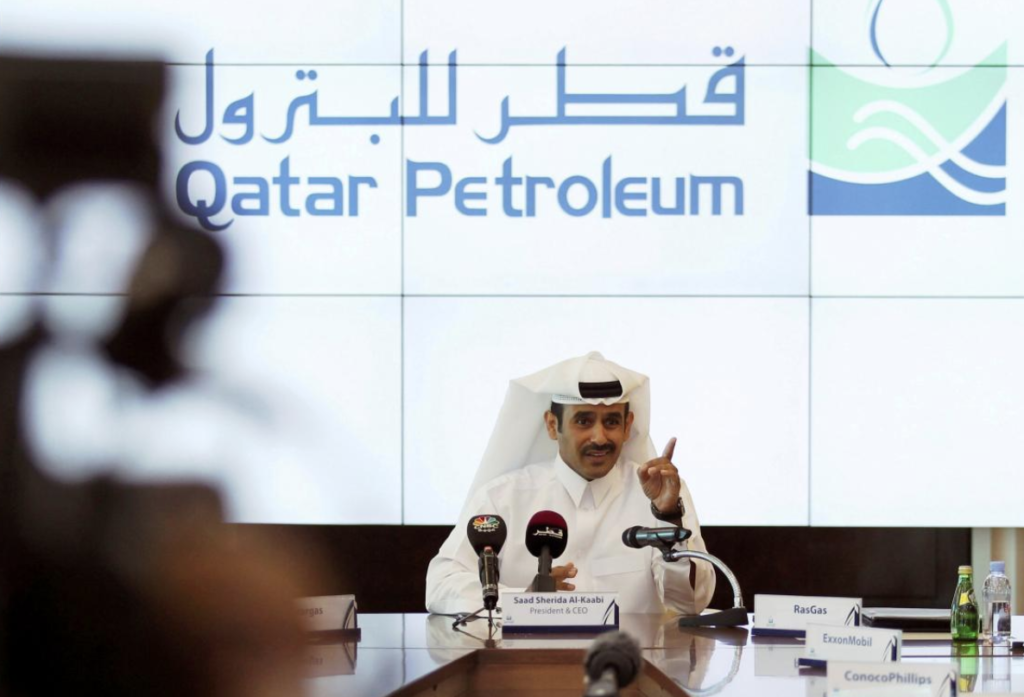
In April this year, the moratorium came to an end. Qatar Petroleum (QP) chief executive Saad al-Kaabi said the company had been “conducting extensive studies and exerting exceptional efforts to assess the North Field, including drilling wells to better estimate its production potential”. As a result, QP had decided that “now is a good time to lift the moratorium”. Work would start on a new venture to produce an extra 2bn cubic feet a day of natural gas for export from a new site in the southern sector of the North Field.

The expectation was that the extra LNG production capacity needed to handle the increased output would be found by the relatively cheap method of debottlenecking the existing trains. At the end of May, QP awarded Japan’s Chiyoda a contract to identify the modifications needed to raise capacity of all the trains at the Ras Laffan LNG plants.

LNG trains ready to launch
Then in July, out of the blue, QP announced that the 2bn cf/d North Field expansion plan was being doubled, and that the country’s LNG output capacity would rise by 30% to reach 100m tonnes a year within five-to-seven years. Petroleum Economist soundings in Doha indicate that Qatar is lining up for a major upstream and downstream gas project that’s estimated to be worth around $30bn. It will involve well drilling, the construction of an offshore receiving platform, the laying of pipes to shore, and the establishment of a new gas treatment plant (with the likelihood of some 24,000 barrels a day of condensate being produced) before the gas reaches the LNG facilities. The debottlenecking is expected to add around 10% to current capacity, taking it up from 77m t/y to about 85m t/y. The expectation at present is that two new LNG trains, each able to produce around 7.5m t/y, will be needed to process all the new gas, with capacity rising to the target 100m t/y.

No timetable has yet been decided for the new venture, but it’s unlikely that QP will reach an agreement with a joint venture partner or partners before the second half of 2018. A huge amount of detail needs to be discussed, not least about the financing of the deal. Given the current constraints resulting from low global oil prices and the economic embargo, QP might want its IOC partner to shoulder the lion’s share of capital expenditure. While the joint venture contract will be open to bidding, there’s a strong possibility that one of the IOCs already involved in Qatargas/RasGas (including ExxonMobil, ConocoPhillips, Shell and Total) will be a favourite. The same goes for firms involved in the construction of the new trains.

Various explanations can be heard in Doha for QP’s decision to double the already announced North Field expansion programme. One is that Qatar is concerned about Iran’s increasing draw-down of gas from its half of the field (which it calls South Pars), another is that Qatar wants to send out a defiant message that it won’t be intimidated by the economic embargo. In the view of Roudi Baroudi, head of Doha-based consultancy Energy & Environment Holding “the North Field has been Qatar’s source of stability, and the country now wants to underpin that stability still more.” Luiz Pinto of Brookings Doha also sees a link with the embargo: “The IOCs and other key foreign investors involved will lobby for international support for Qatar. The projects will also prove to be an additional source of support for the economy in the run-up to the World Cup in 2022.”

After 2022, Qatar alone will bring new output to market—regaining its crown as the world’s leading LNG producer. PE Steady as she goes OIL OUTPUT / Qatar’s oil strategy is to stem further production declines, as it tightens its economic belt and keeps the investment focus on natural gas / Gerald Butt, Doha If a day comes soon, with or without Opec/non-Opec consent, when Gulf oil producers decide to open the taps to the full, Qatar’s contribution won’t make the headlines. Saudi Arabia, with healthy spare capacity, and Kuwait—hopeful of reclaiming its 250,000-barrels a day Neutral Zone half-share and reaching its long-desired 4m b/d capacity target— are the Gulf’s best hopes for adding new crude oil to the market.

Since the discovery and spectacular development of Qatar’s offshore North Field and the country’s meteoric ascent to the peak of liquefied natural gas producers, oil has always been something of a poor relation. In the current climate, with a harsh mixture of relatively low global oil prices and a Qatar economy that’s struggling to come to terms with the Saudi- UAE-led blockade, its status is unlikely to change. Hang on as best you can, seems to be Qatar Petroleum’s (QP) message to the country’s oil sector.

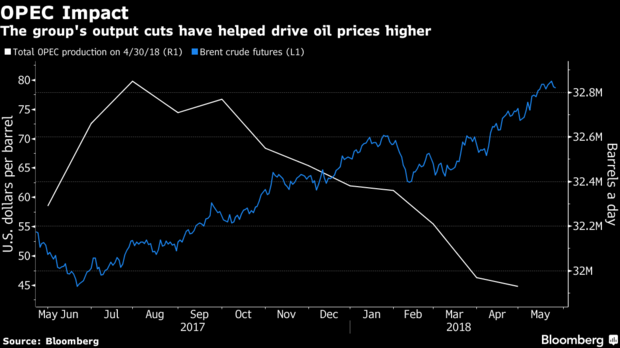
Qatar’s baseline for the Opec/non- Opec cuts was 0.648m b/d, down from peak production of more than 0.73m b/d at the start of this decade. Its current allocation is 0.618m b/d, with actual production in the 0.6m b/d range. “We’ll be quite happy if we can stick with this figure for the immediate future,” an oil sector official in Doha said. “We won’t realistically be expecting more.”

Maintaining the current production level will require enough effort in itself. Nearly half of Qatar’s output comes from the offshore al-Shaheen field, 50 miles (80km) north of Ras Laffan. Up to July this year, Denmark’s Maersk was the operator. The field has now been taken over by the North Oil Company (NOC), a joint venture between France’s Total (30% stake and operator) and QP, (70%).

The concession term is 25 years. Al-Shaheen began production in 1994, and today 300 wells and 30 platforms are in operation. Total’s task, after what’s been a frosty handover from Maersk to NOC, is to expedite the drilling of new wells—the company says it has immediate plans to drill 56, using three rigs—in order to keep al-Shaheen at a 300,000 b/d plateau.

Maintaining a theoretical capacity plateau of 200,000 b/d is also QP’s goal at its vast and veteran (production began in 1949) onshore Dukhan field. At present, output is in the range of around 175,000 b/d. A study for possible enhanced oil recovery operations has been carried out, and the plan is for this to begin in the next two years, QP budgets allowing. But once again, the best hope is for merely a holding operation. There’d been plans for extra barrels to come from the offshore Bul Hanine field, also operated by QP.

A proposal to more than double capacity from 40,000 b/d to 90,000 b/d was announced in May 2014, but dropped when international oil prices fell in the months thereafter. Earlier this year, engineering, procurement and construction bids were received for a Phase 1B development scheme, again with a 90,000 b/d target. But with the economic blockade prompting a reassessment of spending plans, Bul Hanine’s production is unlikely soon to rise above 40,000 b/d. The fate of Qatar’s oil sector, it seems, is to remain for ever in the shadow of big brother gas.


بارودي: الجدول الزمني للإمتيازات البرية أقل من البحري

Margerie” DE قدّم الكثير لتطوّر القطاع وتقريب الدول”
بارودي: الجدول الزمني للإمتيازات البرية أقل من البحري

المركزية- أعرب الخبير الإقتصادي في شؤون الطاقة رودي بارودي عن أسفه الشديد لغياب رئيس مجلس إدارة شركة “توتال” العالمية Christophe de Margerie “الرجل الذي قدّم الكثير لتطوّر هذا القطاع وحاول التقريب في ما بين الدول”، مثمّناً “رحيله وهو يقوم بمهامه كرئيس “توتال” إذ كان يحاول تذليل المزيد من الصعوبات التي يواجهها القطاع عموماً و”توتال” خصوصاً، وتحقيق إنجازات جديدة لشركته”.

من جهة أخرى، شرح بارودي لـ”المركزية”، بعض النقاط المتعلقة بآلية التنقيب البري والبحري عن النفط والغاز في لبنان، وشدد في هذا السياق على أبرز المحاور التي تشكّل أولوية في هذه العملية، وهي:

– أولاً: على الحكومة فصل القانون البري وآلياته عن عملية التنقيب البحري.

– ثانياً: إعداد خارطة طريق واضحة وشفافة للإمتيازات البرية.

وأضاف: يظهر أن مع نهاية العام الجاري، ستتوفر لدى غرفة البيانات (Data Room ) في وزارة الطاقة والمياه، كامل صوَر ودراسات 3D حول باطن سطح الأرض لشركات الـ E & P (الشاطئ) Transitional Zone ، وذلك من أجل شراء البيانات وفحصها قبل البدء بالإلتزامات البرية. أما الخطوط الزلزالية 2 D الحالية فسيتم دمجها في مشروع المسح الجوي، عبر قياسات متعددة”.

وقال رداً على سؤال: إن الجدول الزمني للإمتيازات البرية سيستغرق فترة زمنية أقل بكثير مما تتطلبه الإمتيازات البحرية، إذ في الإمكان البدء بالحفر (الإستكشاف) وتنفيذه في وقت أسرع مما هو عليه في الآبار البحرية.

وأكد أن “الإلتزام البري للشركات يُفترض أن يُحدّد لمدة ثلاث سنوات، ويمكن أن تشمل الإمتيازات في هذا المجال، بين ثلاثة وخمسة آبار على الأقل وبميزانية أقل من تلك المخصصة للآبار البحرية”، وأعطى مثالاً على ذلك، “خمسة ملايين دولار للآبار البرية، في مقابل 125 مليوناً للآبار البحرية البعيدة من الشاطئ، أما المدة فتتراوح بين شهرين وأربعة أشهر للأولى، في مقابل ستة أشهر وسنة للثانية.

وفي المقلب الآخر، شدد بارودي على “ضرورة تقسيم المياه البحرية الخاضعة للولاية القضائية اللبنانية، إلى مناطق بشكل رُقع، على أن يتم الانتهاء من نموذج “اتفاقية الإستكشاف والإنتاج” في أسرع وقت، بالتزامن مع مرسوم دفتر الشروط والإفادة من التراخيص البحرية.

وقال: يبقى الأهم التوافق السياسي على هذا المشروع المستقبلي الضخم، والإفادة من دعوات رئيس المجلس المتكررة إلى الحوار والحفاظ على الأمن والإقتصاد على السواء.

وأخيراً، أثنى بارودي على “الدور الرائد الذي تقوم به “هيئة ادارة قطاع البترول في لبنان” وتنظيمها للمؤتمر المنعقد في بيروت، والذي سيطلق آفاقاً جديدة في عملية التنقيب عن النفط”