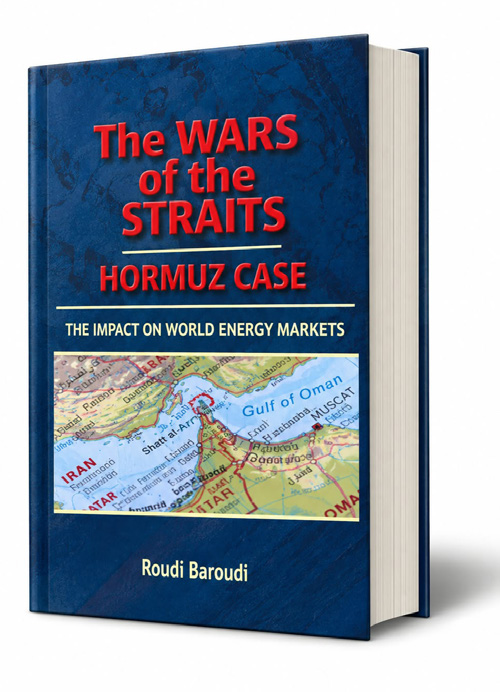
A new book titled “The Wars of the Straits – Hormuz Case: The Impact on World Energy Markets” by Dr. Roudi Baroudi, an international energy consultant and member of the Transatlantic Leadership Network (TLN), was released Tuesday in Washington, D.C.
The book offers a comprehensive examination of the crises of 2026 and their repercussions, tracing the historical roots of conflicts over strategic waterways while exploring options to reduce the risks of similar disruptions in the future.
From the “Tanker War” to the Genoa-Venice Rivalry
Baroudi does not confine his analysis to modern confrontations in the Gulf or the “Tanker War” of the 1980s. Instead, he traces the concept of “wars of the straits” back some seven centuries, examining the medieval rivalry between Genoa and Venice over access routes to the Bosporus and the Black Sea.
Through this approach, the book places the events of 2026 within a broader historical context of competition over maritime corridors, highlighting their role in great-power rivalry and their use as instruments of political and economic pressure during periods of crisis.
Hormuz and Bab el- Mendeb
The book includes appendices addressing the U.S.-Iranian Memorandum of Understanding signed on June 17, 2026, the world’s most important straits and waterways, the strategic relationship between the Strait of Hormuz and Bab el-Mandeb, as well as several maritime boundary delimitation agreements in the region.
“The Wars of the Straits – Hormuz Case” argues for the development of a sustainable international framework grounded in international law, scientific evidence, and facts, with the aim of safeguarding freedom of navigation through the strait and reducing the risks associated with the use of maritime corridors in international conflicts.
In this context, the book connects energy security, freedom of navigation, and regional stability, based on the premise that any major disruption to shipping through strategic straits does not remain confined to the countries bordering them. Its effects can extend to energy markets, supply chains, global trade, and the marine environment.
The Transatlantic Leadership Network (TLN), with which Baroudi is affiliated, announced the book’s release, highlighting its geopolitical, legal, and technical scope, while Casemate is handling its distribution.
