خطة طوارئ لإنقاذ قطاع الكهرباء

465740100404303754

يعاني قطاع الكهرباء مشكلات عدة ومصاعب لا تزال تلقي بثقلها على الاقتصاد اللبناني عموماً، وعلى موازنته خصوصاً، على الرغم من الخطط التي وضعتها الوزارات المتعاقبة، كانت آخرها الخطة التي اقرها مجلس الوزراء في حزيران 2010. وتتشعب مشكلات القطاع من الانتاج الى التوزيع الى الجباية، على الرغم من تلزيمها الى الشركات الخاصة.


يحتاج هذا القطاع الحيوي اولاً الى القرار السياسي، وثانياً الى إبعاد المصالح الشخصية والآنية عن معالجة مشكلاته. لذلك نرى ضرورة احترام القوانين الصادرة عن مجلس النواب وتنفيذها عبر:
1 – بت كل الاشكالات المالية والادارية، مع متعهد اشغال بناء معمل جديد في دير عمار بقدرة 435 ميغاواط في اسرع وقت ممكن والطلب اليه بدء التنفيذ فوراً، على ان يترافق ذلك مع تكليف مجلس الإنماء والاعمار العمل على تأمين المال اللازم من طريق الصناديق والمؤسسات الداعمة لتنفيذ معمل جديد بالقدرة ذاتها في حرم معمل الزهراني، لتوفير الحد الادنى من الطاقة الكهربائية التي يحتاج اليها لبنان حالياً.
2 – الاسراع في استلام الوحدات التي جرى تلزيمها في معملي الذوق والجية وتشغيلها، تمهيداً لوضعها في الخدمة.
3 – التعجيل في تعيين هيئة تنظيم قطاع الكهرباء، وبدء تطبيق القانون 462/2002 بعدما عطّل تنفيذه على مدى اكثر من 14 عاماً، من دون سبب قانوني او شرعي وبمزاجية الخوف على صلاحيات مزعومة للوزير اذا ما مارست الهيئة استقلاليتها.
ان صدور القانون رقم 288 تاريخ 30/4/2014 يدل بطريقة لا شك فيها، الى ان الحكومة عجزت بشكل كامل عن تطبيق القانون 181/2011، فلجأت الى اصدار قانون ليحل مجلس الوزراء محل هيئة تنظيم قطاع الكهرباء، بعدما عجزت الحكومات المتعاقبة عن تعيين هيئة من خمسة اشخاص أو أنها لا تريد، وبشكل فاضح تطبيق القوانين الصادرة عن مجلس النواب.
4 – التطبيق الاستنسابي لمواد القانون 181/2011 جعل منه اداة طيعة، وما زاد الأمر سوءاً عدم تنفيذ كامل الشروط التي وضعها القانون 181/2011 فلا تعديلات أدخلت على متن القانون 462/2002 خلال الاشهر الثلاثة، ولا حتى في اربع سنوات. كما لم يعيَّن مجلس ادارة جديد لكهرباء لبنان ولم يتابع انجاز المشاريع التي لزِّمت وألزمت لبنان بمبالغ مالية ضخمة.
5 – بناء معملي الزهراني ودير عمار، بنيا اصلاً، تنفيذاً لخطة نهوض وطني وضعت عام 1994، ليعملا على الغاز الطبيعي وليس على الديزل أويل، بناء على نصيحة من شركة كهرباء فرنسا، لما يؤمنه استعمال الغاز الطبيعي في انتاج الطاقة من وفر في كلفة الانتاج، وتخفيف الضرر على البيئة، لكن المناكفات السياسية والمزاجيات الشخصية لبعض المسؤولين منذ عام 2002 عطّلت المشروع، ما كبّد الخزينة مبالغ طائلة عن مشتقات نفطية.
ولئن تشغيل معامل الكهرباء على الغاز الطبيعي بات متعذراً من دون وجود محطات تخزين وتسييل الغاز الطبيعي بالقرب من معامل الانتاج امراً لا بد منه، ولا بديل منه، اصبح لزاماً على الدولة ان تبدأ شراء او استئجار او إنشاء محطة عائمة لتخزين وتسييل الغاز الطبيعي لزوم معملي الانتاج في الزهراني ودير عمار، بحيث تقام محطة عائمة في كل منهما ولو احتاج ذلك الى توسيع المرفأ أو انشاء سد للأمواج لحماية المحطة من العوامل البحرية.
توازياً، ان انشاء المحطتين يؤدي الى وفر هائل في ثمن المحروقات، ما يؤدي بدوره الى خفض الدعم لمؤسسة كهرباء لبنان وتخفيف نسبة الدين والفوائد المترتبة عليها، خصوصاً ان إمكانات الدولة ومؤسسة كهرباء لبنان، في مجال جباية مستحقاتها ومنع الاعتداء على شبكاتها لا تزال قاصرة، ما يخفض قدرتها على لجم العجز او مواجهته بتفعيل الجباية.
ونرى من الافضل استئجار محطة عائمة في كل معمل، على ان يكون المورِّد صاحب خبرة عالمية في هذا المجال، ولديه القدرة على أن يورّد الغاز الطبيعي، بالاضافة الى المحطة في الوقت نفسه.
أخيراً، ان ملفاً بهذا الحجم الوطني والخطورة في حال استمراره يستحسن ان يكون برعاية رئيسي مجلسي النواب والوزراء في الوقت الحاضر، خصوصاً ان الرئيس نبيه بري ابدى اهتماماً واسعاً في انقاذ القطاع ولم يوفِّر جهداً في هذا السبيل، على ان تتم مقاربته بشفافية وتقنية وحس وطني مسؤول لانقاذه وحماية الخزينة من تداعيات الاهدار الناتج منه، وتفادي الخسائر التي تتكبدها الدولة جراء معالجته.


Sanctions relief may enable Iran energy help

445624_img650x420_img650x420_crop

BEIRUT: Over the past five years, Iran has repeatedly offered assistance to Lebanon’s troubled energy sector, from building power plants and dams to rehabilitating oil refineries. While none of these offers have come to fruition, the expected gradual lifting of U.S. sanctions on Iran may present a fresh opportunity for the two countries to move forward together on energy deals.

“Legally speaking, it wasn’t easy to deal with Iran on energy or other areas of cooperation [suggested by Iran], whether military or infrastructure. It was always at the rhetorical level or the signature of an MOU [Memorandum of Understanding] because of the legal sanctions,” said Mona Sukarrieh, co-founder of Beirut-based political risk consultancy Middle East Strategic Perspectives.

“I think the legal sanctions were a very convenient excuse also because there are political obstacles,” she told The Daily Star, referring to “the major political divide between March 8 and March 14.” There has been “more of a general reluctance [from pro-March 14 factions] toward Iran-anything, rather than specifically energy.”

With the upcoming lifting of sanctions, “it is going to be much harder now to justify automatically rejecting cooperation with Iran,” she said. Moreover, the “energy sector, unlike other more sensitive areas of cooperation [such as military], is a good starting point.”

Energy is a critical component of all services and industries, from bakeries to ports, noted Roudi Baroudi, CEO of Doha-based energy consultancy Energy and Environment Holding, whose clients include the Lebanese government. He told The Daily Star that if political factions put their differences aside and focused on the country’s economic development, energy “would definitely be a very nice sector to work on.”

Cesar Abou Khalil, an adviser to the energy minister since November 2009, downplayed the effect of sanctions. “Has it ever been because of sanctions that things didn’t work out in energy projects? No not to my knowledge,” he told The Daily Star.

As an example, Abou Khalil said the Energy Ministry had rejected Iran’s gift of a power plant in Zahrani because its technological capabilities fell short of the requirements as set out under the 2010 Policy Paper for the Electricity Sector. The ministry wanted tri-fuel turbines that could be fueled by gas oil, natural gas, or fuel oil, but Iran could only provide turbines fired on the first two sources. “Since we don’t have gas, we would have had to run these turbines on gas oil, which was very very costly at that time.”

The countries signed three energy-related MOUs on oil, water and electricity during then-Iranian President Mahmoud Ahmadinejad’s visit to Beirut in October 2010. They have not moved forward with them, Abou Khalil said, citing constant upheaval in the government. “In Lebanon we spent more than a year forming governments since then. … We spent many months either forming a government or with the resigned prime minister during the Mikati government.

“Lebanon is open to cooperation with all friendly countries,” Abou Khalil emphasized, “[and] Iran is a friendly country.

“If [Iranian] companies have the technology required and they have the best offers at the time, I don’t see why the ministry or the administration or any agency of the Lebanese government would have a problem with that,” he added.

When asked which areas Iran was well-suited to help with, Abou Khalil said it was “very well-equipped in the oil and electricity sectors.”

Sukkarieh and Baroudi echoed that electricity is the most feasible energy subsector for Lebanese cooperation with Iran.

For the time being, it looks unlikely that Iran can export energy to Lebanon. Transporting gas – which must be transported by pipelines, or liquefied and carried in tankers – is unfeasible, given that it must pass through war-torn Syria and Iraq. Currently, there are no pipelines connecting Lebanon with Iran. The Iran-Iraq-Syria gas pipeline announced in 2011 that may have extended to Lebanon and Europe has yet to materialize.

Oil, though simpler to handle, must still be transported via tankers. Sukkarieh also noted that feasibility studies have found that it would not make economic sense to rehabilitate Lebanon’s two oil refineries, given how small and outdated they are.

Two years ago, the National Iranian Drilling Corporation – the only Iranian applicant – failed in the first prequalification round for participating in Lebanon’s long-delayed offshore oil and gas exploration licensing. Sukkarieh said it “wouldn’t be far-fetched to imagine an Iranian company applying to prequalify, more likely as a non-operator” in a second prequalification round under discussion.

Baroudi said Iran is well-equipped to assist Lebanon with onshore exploration and drilling. However, he said Iran is not capable of dealing with offshore “unless teamed-up with major oil and gas firms from the West or Far East.”

The Iranian Embassy in Beirut accepted written questions from The Daily Star, but did not respond by the time of publication.

“I wouldn’t expect Iran to be confrontational in its approach; it would be counterproductive,” Sukkarieh said. “The Iranians are more likely to diversify their business partners in the country, whether Lebanese or non-Lebanese, and will seek to initiate projects that will be perceived as benefitting the county and not just a particular segment of society.”


بارودي أعدّ خطة طوارئ لإنقاذ قطاع الكهرباء لاستعجال تنفيذ مشروع إنشاء خط غاز وطني

465740100404303754

في خضمّ البحث عن حل لمشكلة معمل الزوق المزمنة، حيث تعلو صرخة فاعليات المنطقة وسكانها من ارتفاع منسوب التلوّث الناتج عن الدخان المتصاعد منه، أعدّ الخبير الدولي في النفط والغاز رودي بارودي خطة طوارئ لإنقاذ قطاع الكهرباء تشكّل محور الخطط كافة الخاصة بهذا الشأن، تناولت خط الغاز في الزهراني والبداوي و«هي الأهم» على حدّ تعبير بارودي في حديث إلى «الديار»، والذي أورد في خطته اقتراحاً من ضمن سلسلة اقتراحات قدّمها للحكومات السابقة، يقضي بمدّ خط غاز من البداوي إلى الزوق. وقال: إن التلوّث الحاصل مزمن، ولا أحد يعمل على معالجته، ومن أهم الخطط السابقة التي تقدّمت بها إلى الحكومات والوزارات المعنية المتعاقبة، هو «مشروع إنشاء خط غاز وطني» بمثابة شبكة للغاز الطبيعي تمتد من البداوي إلى صور. واقترحنا في المرحلة الأولى مدّ خط غاز إلى معمل الزوق الحراري حيث توجد 800 ميغاوات، والتلوّث الناتج عنها سام إلى درجة عالية من الخطورة.


وإذ ذكّر بأنه «وافق على هذا الإقتراح وزراء البيئة السابقون من دون استثناء وبكركي وغيرهم»، شدد بارودي على «ضرورة الإستعجال في وضع خطة لمعملي الغاز في الزهراني والبداوي، عبر وضع محطات عائمة، ومدّ خط غاز إلى معمل الزوق»، مؤكداً أن «هذا الحل لا يحدّ من التلوّث فحسب، بل أيضاً يؤمّن وفراّ مالياً واقتصادياً وسلامة صحية للسكان».
واعتبر أن «ملفاً بهذا الحجم الوطني والخطورة، في حال استمراره، يُستحسن أن يكون برعاية رئيسي مجلسي النواب والوزراء في الوقت الحاضر، خصوصاً أن الرئيس نبيه بري أبدى اهتماماً واسعاً بإنقاذ القطاع ولم يوفر جهداً في هذا السبيل، على أن تتم مقاربته بشفافية وتقنية وحسّ وطني مسؤول لإنقاذه وحماية الخزينة من تداعيات الهدر الناتج منه، وتفادي الخسائر التي تتكبّدها الدولة جراء معالجته».
نص الخطة: وتنشر «الديار» نص خطة الطوارئ المقترحة التي وضعها بارودي لإنقاذ قطاع الكهرباء: «يعاني قطاع الكهرباء من مشكلات عدّة ومصاعب لا تزال تلقي بثقلها على الإقتصاد اللبناني عموماً وعلى موازنته خصوصاً، على الرغم من الخطط التي وضعتها الوزارات المتعاقبة، كان آخرها الخطة التي أقرّها مجلس الوزارء في حزيران 2010. وتتشعب مشكلات القطاع من الإنتاج إلى التوزيع فالجباية، على الرغم من تلزيمها إلى الشركات الخاصة. ويحتاج هذا القطاع الحيوي أولاً إلى القرار السياسي، وثانياً إلى إبعاد المصالح الشخصية والآنية عن معالجة مشكلاته. من هنا، نرى واجب وضرورة إحترام القوانين الصادرة عن مجلس النواب وتنفيذها عبر:
1- البت وحسم كل الإشكالات المالية والإدارية، مع متعهّد أشغال بناء معمل جديد في ديرعمار بقدرة 435 ميغاواط في أسرع وقت ممكن والطلب اليه بدء التنفيذ فوراً، على أن يترافق ذلك مع تكليف مجلس الإنماء والإعمار العمل على تأمين المال اللازم من طريق الصناديق والمؤسسات الداعمة لتنفيذ معمل جديد بالقدرة ذاتها في حرم معمل الزهراني، لتوفير الحدّ الأدنى من الطاقة الكهربائية التي يحتاج إليها لبنان حالياً. ولا بدّ من الإشارة إلى أن مصلحة لبنان تكون في عدم الدخول في خلاف مع المتعهد يؤدّي إلى محاكمات أو اللجوء الى التحكيم وانتظار نتائجه لسنوات، ويدرك الجميع أن إجراءات التلزيم التي اعتمدتها وزارة الطاقة والمياه تشوبها الكثير من الثغرات.
2- الإسراع في استلام الوحدات التي جرى تلزيمها في معملي الذوق والجيه وتشغيلها، تمهيداً لوضعها في الخدمة.
3- ضرورة الإسراع في تعيين هيئة تنظيم قطاع الكهرباء، وبدء تطبيق القانون 462/2002 بعدما عُطل تنفيذه على مدى أكثر من 14 عاماً، من دون سبب قانوني أو شرعي وبمزاجية الخوف على صلاحيات مزعومة للوزير إذا ما مارست الهيئة استقلاليتها. إن صدور القانون رقم 288 تاريخ 30/4/2014 يدلّ بطريقة لا شك فيها، إلى أن الحكومة عجزت بشكل كامل عن تطبيق القانون 181/2011، فلجأت إلى إصدار قانون ليحل مجلس الوزراء محل هيئة تنظيم قطاع الكهرباء، بعدما عجزت الحكومات المتعاقبة عن تعيين هيئة من خمسة أشخاص أو انها لا تريد وبشكل فاضح، تطبيق القوانين الصادرة عن مجلس النواب. إذ أن عدم التنفيذ الكامل لبنود القانون 181 دفع المشرّع الى اللجوء الى إقرار القانون رقم 288/2014 بمادة وحيدة ليعدل المادة السابعة من القانون 462/2002، كما أضاف إلى المادة السابعة من القانون رقم 462 تاريخ 2/9/2002 (تنظيم قطاع الكهرباء) الفقرة الآتية: «بصورة موقتة، ولمدة سنتين، وإلى حين تعيين أعضاء الهيئة واضطلاعها بمهامها، تمنح أذونات وتراخيص الإنتاج بقرار من مجلس الوزراء بناءً على اقتراح وزيري الطاقة والمياه والمالية». كل ذلك زاد الأمر تعقيداً، خصوصاً أن إقرار كل هذه القوانين لا يهدف إلا إلى التهرّب من تعيين الهيئة الناظمة للقطاع الكهربائي، علماً أن الهيئات الناظمة لقطاع الكهرباء والطاقة في العالم أثبتت نجاحها في دول العالم عموماً وأوروبا خصوصاً، إذ استطاعت تنفيذ استراتيجيات ناجحة ومتقدمة في مختلف مجالات الطاقة.
4- التطبيق الإستنسابي لمواد القانون 181/2011 جعل منه أداة طيّعة كما بينّا ذلك سابقاً، وما زاد الأمر سوءاً هو عدم تنفيذ كامل الشروط التي وضعها القانون 181/2011 فلا تعديلات أدخلت على متن القانون 462/2002 خلال الأشهر الثلاثة، ولا حتى في 4 سنوات. كما لم يعيّن مجلس إدارة جديد لكهرباء لبنان ولم يتم متابعة انجاز المشاريع التي لزمت وألزمت لبنان بمبالغ مالية ضخمة.
5 – بناء معملي الزهراني ودير عمار تنفيذاً لخطة نهوض وطني وضعت عام 1994، ليعملا على الغاز الطبيعي وليس على الديزل أويل، بناءً على نصيحة من شركة كهرباء فرنسا، لما يؤمنه استعمال الغاز الطبيعي في انتاج الطاقة من وفر في كلفة الإنتاج، وتخفيف الضرر على البيئة، لكن المناكفات السياسية والمزاجيات الشخصية لبعض المسؤولين منذ العام 2002 عطلت المشروع، ما كبّد الخزينة مبالغ طائلة عن مشتقات نفطية.
وبما أن خط الغاز العربي الذي بدأَ العمل على إنجاز بعض أجزائه، ونتيجة ما يجري في المنطقة، جعلت من المستحيل في المدى المنظور استكماله والإفادة منه. وبما أن تشغيل معامل الكهرباء على الغاز الطبيعي بات متعذراً من دون وجود محطات تخزين وتسييل الغاز الطبيعي بالقرب من معامل الإنتاج أمراً لا بد منه ولا بديل عنه، أصبح لزاماً على الدولة أن تبدأ شراء أو استئجار او إنشاء محطة عائمة لتخزين وتسييل الغاز الطبيعي لزوم معملي الإنتاج في الزهراني ودير عمار، بحيث تقام محطة عائمة في كل منهما ولو احتاج ذلك الى توسيع المرفأ أو إنشاء سدّ للأمواج لحماية المحطة من العوامل البحرية.
توازياً، إن إنشاء المحطتين يؤدّي إلى وفر هائل في ثمن المحروقات، ما يؤدي بدوره إلى خفض الدعم لمؤسسة كهرباء لبنان والتخفيف من نسبة الدين والفوائد المترتبة عليها، لا سيما أن إمكانات الدولة، مؤسسة كهرباء لبنان، في مجال جباية مستحقاتها ومنع الإعتداء على شبكاتها لا تزال قاصرة، ما يخفض قدرتها على لجم العجز أو مواجهته بتفعيل الجباية.
ونرى أن من الأفضل استئجار محطة عائمة في كل معمل، على أن يكون المورد صاحب خبرة عالمية في هذا المجال، ولديه القدرة على أن يورد الغاز الطبيعي بالاضافة الى المحطة في الوقت نفسه. لما في ذلك من وفر في الكلفة والإشراف والمراقبة، بحيث ينص دفتر الشروط الموحّد على أن يتم التعاقد على طريقة مفتاح باليد، اي أن تحصل مؤسسة الكهرباء على الغاز الطبيعي الذي تحتاج إليه معاملها بشكل واضح ومحدّد بالكميات والكلفة، وهي الطريقة التي اعتمدتها دول عدة بينها الكويت، دبي والأردن.
أخيراً، إن ملفاً بهذا الحجم الوطني والخطورة، في حال استمراره، يُستحسن أن يكون برعاية رئيسي مجلسي النواب والوزراء في الوقت الحاضر، خصوصاً أن الرئيس نبيه بري أبدى اهتماماً واسعاً بإنقاذ القطاع ولم يوفر جهداً في هذا السبيل، على أن تتم مقاربته بشفافية وتقنية وحسّ وطني مسؤول لإنقاذه وحماية الخزينة من تداعيات الهدر الناتج منه، وتفادي الخسائر التي تتكبّدها الدولة جراء معالجته.


Energy: Turkish Continuous Provocations in the East Mediterranean

465740100404303754

By Roudi Baroudi

Cypriot President Nicos Anastasiades made full use of the high-profile stage created by the latest summit in Cairo with the leaders of Egypt and Greece, issuing a very public call for Turkey to adopt a “constructive stance” in addressing regional disputes.

Recent Turkish intrusions into the internationally recognized Republic of Cyprus’s Exclusive Economic Zone (EEZ) – at a time when Nicosia is working with private companies to determine the extent of the divided island’s offshore oil and gas reserves – have prompted the ROC to suspend peace talks with the self-styled “Turkish Republic of Northern Cyprus” (TRNC), which is recognized only by Ankara.

With both Egyptian President Fatah al-Sisi and Greek Prime Minister Antonis Samaras at his side following their talks, Anastasiades said the repercussions of Turkish actions could be far-reaching.

“Turkey’s provocative actions do not just compromise the peace talks, but also affect security in the Eastern Mediterranean region,” the Cypriot leader said. “For the negotiations to succeed, Turkey needs to show positive intentions and adopt a constructive stance through positive and effective steps in this direction.”

The summit appears to demonstrate that the ROC is making progress in its efforts to build multilateral support in the face of Turkish intimidation.

Indeed, Turkey’s latest gambit in the chess match over Cyprus’ oil and gas reserves is pure obstructionism because no one – including Turkey and its ally, the TRNC – will derive any benefit from the move.

Unless the right people decide otherwise, in which case the potential crisis touched off by the Turkish move could be transformed into an historic opportunity.

Notwithstanding political and diplomatic complications, the legal facts of the case are fairly straightforward. In 1974, Turkish troops invaded the northern third of Cyprus following a coup in Nicosia whose leaders sought an unlikely unification with Greece. Since that time, the Turkish military and more than 100,000 settlers have occupied just over 36% of the island, not only denying displaced Greek-Cypriots the right to return to their homes but also engaging in an illegal policy of systematically exploiting their properties. Successive governments in Ankara have steadily entrenched the occupation, even going so far as to establish the aforementioned TRNC in 1983.

Just as clearly, both the international community and all competent and independent legal authorities have conclusively rejected Turkey’s attempts to gain legitimacy for the TRNC. Resolutions by the United Nations Security Council have repeatedly declared the entity illegal and all of its actions null and void, and urged UN member-states to withhold both diplomatic recognition and all forms of assistance or facilitation. At the same time, a series of regional, national and international legal verdicts – including in the United States, the United Kingdom, several European countries, and the European Court of Human Rights – has comprehensively discredited 40 years of Turkish policy while unreservedly endorsing the right of the ROC to be regarded as the sole legitimate government of the island. In addition, Cyprus’ accession deal with the European Union specifies that although the ROC does not control the occupation zone, its residents are regarded as ROC citizens and therefore as EU ones.

This thorough refutation of Turkish claims enjoys virtually universal support, and until today, the TRNC is formally recognized by only one independent country: Turkey itself. The occupation zone uses the Turkish lira as its currency, direct air travel and many other forms of transport are allowed only from Turkey, and various embargos have resulted in badly stunted economic development.

Greek-Cypriots have yet to obtain redress for the depredations carried out against them, even the economy in the unoccupied two-thirds of the island has been prevented from realizing its potential, and the ROC’s sovereignty remains subject to gross violation. Despite all this, no one has suffered more hardship from Turkish policy and the resultant isolation of the TRNC than Turkish-Cypriots, almost half of whom are estimated to have emigrated since the original 1974 invasion.

An on-again, off-again peace process was rebooted in February of this year, but Turkey’s leaders demonstrated little enthusiasm, and now Ankara has erected yet another obstacle. At the beginning of October, Turkey issued a Navigational Telex (NAVTEX) declaring its intention to carry out offshore seismic surveys, between October 20 and December 20, in a huge area off the island’s southern and eastern coasts.  This area lies well within the ROC’s internationally recognized EEZ and continental shelf, and overlaps substantially with undersea blocs already auctioned off for exploration by international energy companies, including Italian giant Eni and South Korea’s KOGAS. Nonetheless, when October 20 rolled around, the Turkish survey ship Barbaros was reported to have arrived on scene, accompanied by at least one warship and two support vessels.

Once again, the facts render Turkey’s actions null and void. Cyprus’ EEZ is recognized in bilateral delimitation agreements, concluded under the provisions of the UN Convention on the Law of the Sea (UNCLOS), between the ROC and each of the sovereign states with any possible counter-claims, including Egypt (2003), Israel (2010) and Lebanon (2007). Conversely, Turkey has yet to join UNCLOS, proclaim an EEZ, define the extent of its continental shelf, or conclude bilateral delimitation pacts with any of its neighbors in the Eastern Mediterranean. Turkey has, however, concluded delimitation deals with its neighbors in the Black Sea, lending its own weight to the very same international legal precedents that it refuses to abide by in the Eastern Med.

What all this – and so much more – means is that for all of Turkey’s bluster, any project to illegally exploit the ROC’s offshore resources is likely to be stillborn: few respectable countries (if any) will purchase this oil or gas, the isolation of the TRNC will continue, and Turkey could face both damaged trade relationships and even sanctions. In short, Turkey has little to gain, and probably much to lose, if it maintains its current course. Ankara is fully aware of this, so the threat implied by the NAVTEX and the Barbaros cannot be interpreted as anything but a spoiling tactic aimed at hampering the ROC’s own legitimate plans to develop an offshore energy sector by intimidating the government and its partners.

This is where the opportunity comes in. Previous attempts to settle the Cyprus conflict have failed, often reinforcing the kind of zero-sum-game approach that informs Turkey’s latest provocations. With the right handling, however, this time could be very different. The possibilities opened up by Cyprus’ own oil and gas reserves are highly lucrative, and now the EU has endorsed plans to make the island a major regional gas hub which would interconnect the output of several Eastern Mediterranean countries with markets in Europe via pipeline and/or LNG shipping. The incentive to get a reunification deal done has therefore been expanded geometrically, and extended to more third parties.

Apart from both Greek- and Turkish-Cypriots, the primary beneficiaries of such a settlement would be EU consumers, who would gain several advantages from easier and more reliable access to cheaper and greener energy supplies from within the European family. And since Eni is Italy’s largest industrial concern by market capitalization, that country in particular has a powerful motive to see the Cyprus mess cleaned up once and for all. Other major players like France’s Total and Schlumberger, as well as America’s Noble Energy and Halliburton, further widen the field of interested governments whose good offices could be put to good use. Above all else, the founding principles of both the EU and the UN demand that no effort be spared in ending this long and painful chapter of Cypriot history.

Conflicts over energy have fueled violence in many parts of the world, including nearby areas of the Middle East and North Africa. Now the international community has a chance to accomplish the opposite by leveraging energy wealth to end a decades-long dispute. That would serve the legitimate interests of all concerned, including Turkey, which could eventually gain the same access to attractive energy supplies as European countries. First, however, the warships have to return to port.

And stay there.

Roudi Baroudi is an Oil & Gas economist


بارودي لـ«الجمهورية»: النفط موجود براً وقبرص بوابتنا الى أوروبا

logo

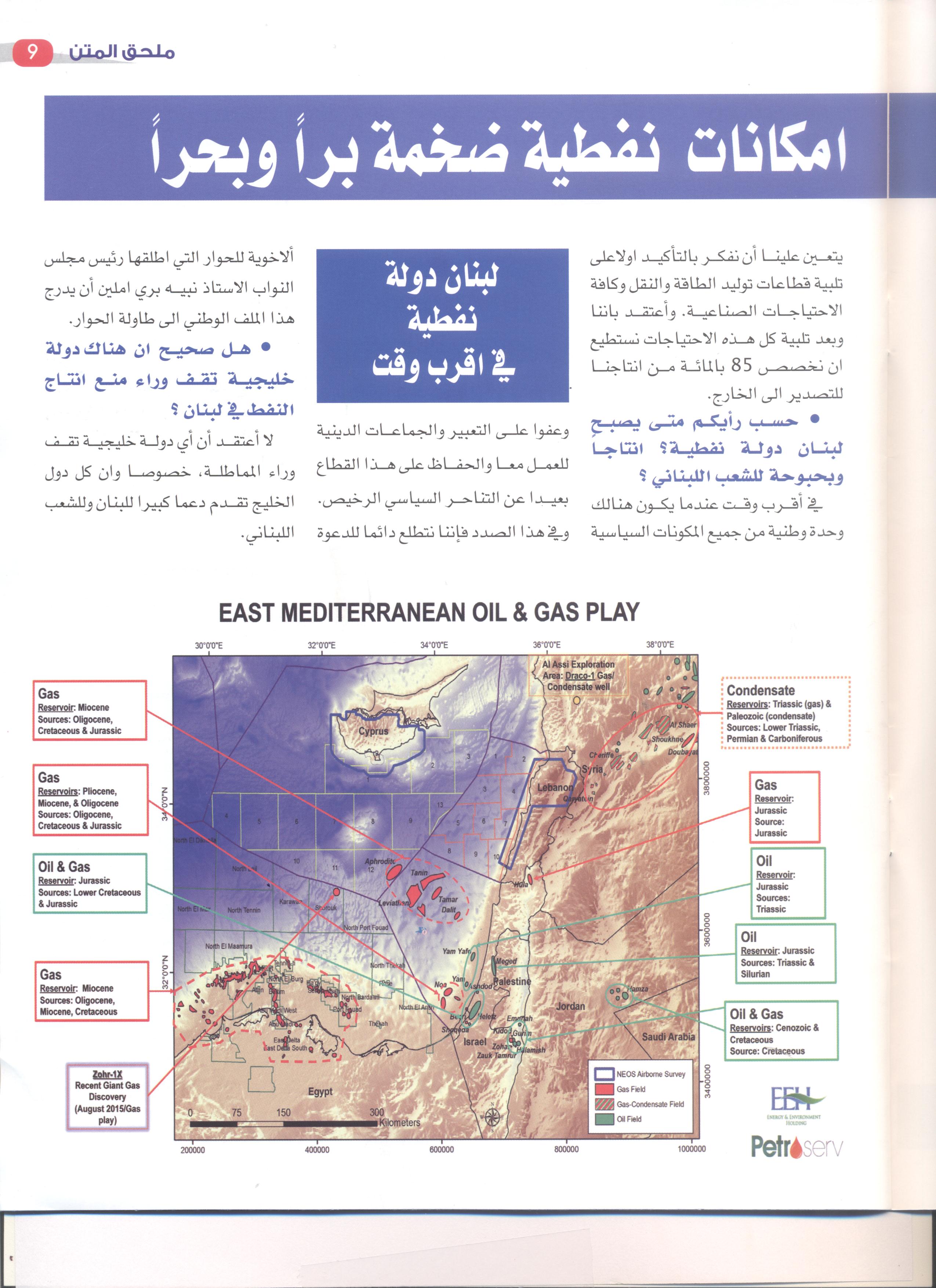
شدّد الخبير الدولي في قطاع الطاقة رودي بارودي على أهمية تعزيز العلاقات بين لبنان وقبرص في ملف النفط والغاز، لأنها أقرب منطقة الينا تسمح لنا بالدخول الى الاسواق الاوروبية. وركز على أهمية المسح البري الذي يجري راهناً والذي من شأنه تزويدنا بمعلومات مهمة عن النفط والغاز والثروة المائية لاسيما الينابيع البرية.

أنجز الخبير الدولي في قطاع الطاقة رودي بارودي دراسته الأخيرة لهذا العام حول «وضع الطاقة في المنطقة» بعد الدراسة السابقة التي أعدّها في هذا الشأن عام 2008.وفي حديث لـ«الجمهورية» أكد بارودي ان الدراسة لا تنحصر بلبنان فقط بل تتحدث عن التقدّم الذي شهدته الدول المجاورة للبنان مثل قبرص اسرائيل غزة وسوريا في حقل الاستكشاف والتنقيب عن النفط، ومن حيث تحديد الكميات أو المخزون النفطي واستناداً الى دراساتهم ما هو المخزون النفطي
المرتقب في لبنان.
وشدد بارودي على اهمية المسح البري الذي يقام راهناً نظراً لأهميته من حيث مساعدة الحكومة على تأكيد احتمالات وجود النفط في لبنان.
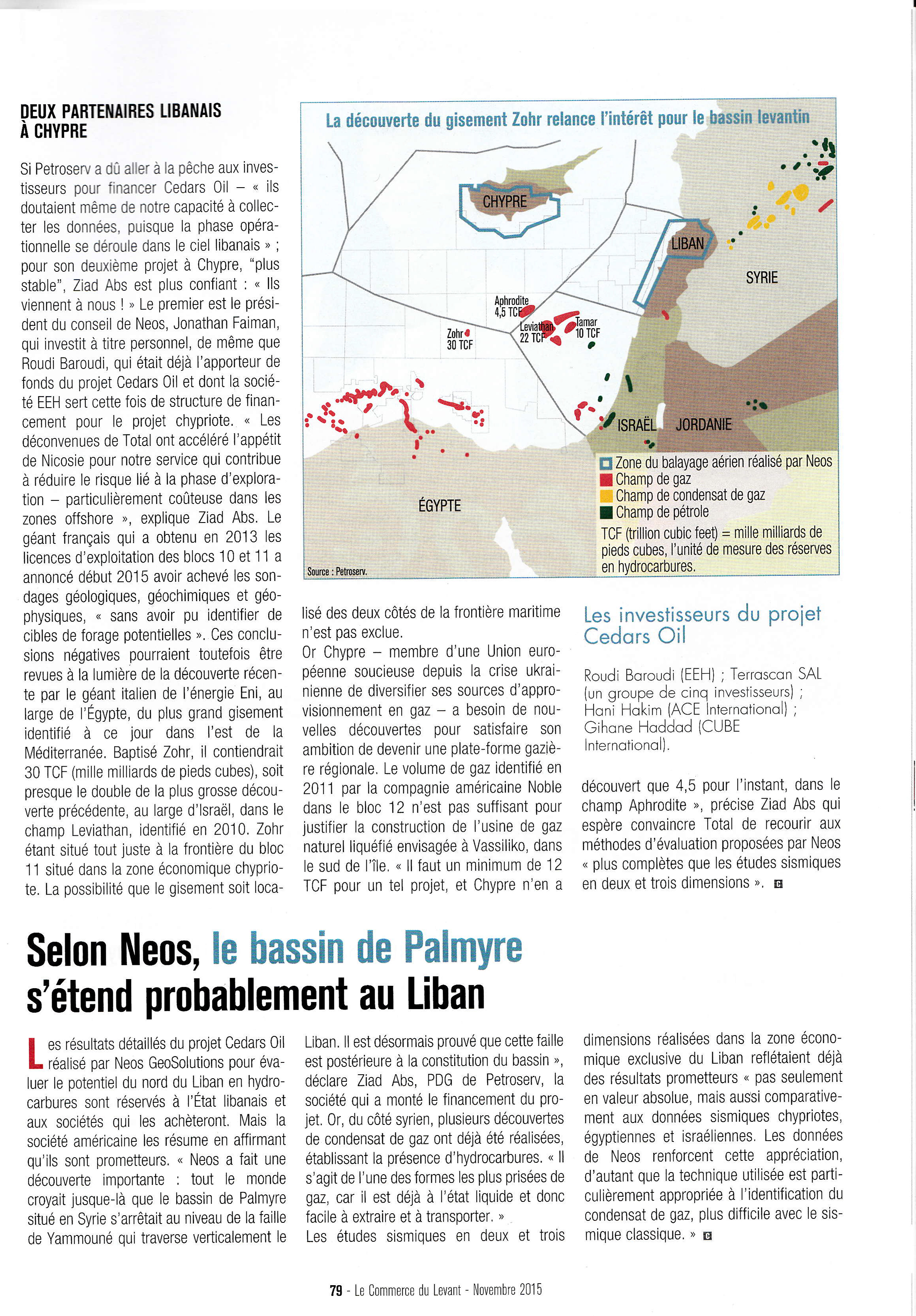
ولفت الى انها المرة الاولى منذ 60 عاماً يحصل فيها تقدم في المسح البري، لافتاً الى انه منذ العام 2002 بدأ مسحoffshore بواسطة 2D و3D. والمسح البري الذي يقام راهناً من شأنه تزويدنا بمعلومات مهمة عن النفط والغاز والثروة المائية من حيث الينابيع البرية، لذا من الضروري عدمتضييع الفرص في هذا المجال للإفادة من هذه الثروة إلى أقصى حدّ.وتشمل الدراسة خرائط تظهر أماكن تواجد آبار النفط والغاز في كل من سوريا وقبرص وفلسطين وغزة، وتظهر هذه الخرائط وجود النفط والغاز في كل البلدان المحيطة بلبنان، ما يؤكد ان في لبنان نفط وغاز.

التعاون مع قبرص

من جهة أخرى، شدّد بارودي على «أهمية تعزيز العلاقات بين لبنان وقبرص في ملف النفط والغاز، وتنمية أواصر التعاون خصوصاً في مجال الغاز السائل والتصدير إلى أسواق أوروبا لأنها الأقرب على الإطلاق لتسويق الغاز».

اما عن جدوى التعاون مع قبرص في هذا الملف، أوضح بارودي ان لبنان في حاجة الى تصدير الغاز عند بدء استخراجه لأن احتياطه من الغاز أكبر بكثير من حاجته، كما ان التصدير ضرورة لتوفير الاموال للخزينة واقرب سوق يمكن ان نصدر اليه النفط أو الغاز هو اوروبا وأقرب بلد اوروبي في محيطنا هي قبرص التي تبعد 100 كلم عن لبنان.

لذا نحن في حاجة للتعاون مع قبرص لانها بوابتنا الى اوروبا، خصوصاً وأن اوروبا تستورد الغاز من بلدان تبعد عنها أقله 4 الاف كيلومتر.
واستيراد اوروبا من الغاز يمر بنحو 7 بلدان، حيث تضطر الى دفع ضرائب الى 7 بلدان أقله. انطلاقاً من ذلك، نرى ان للبنان موقعاً استراتيجياً في تصدير النفط الى اوروبا، مروراً بقبرص.


Lebanon onshore oil and gas ‘promising’

logo


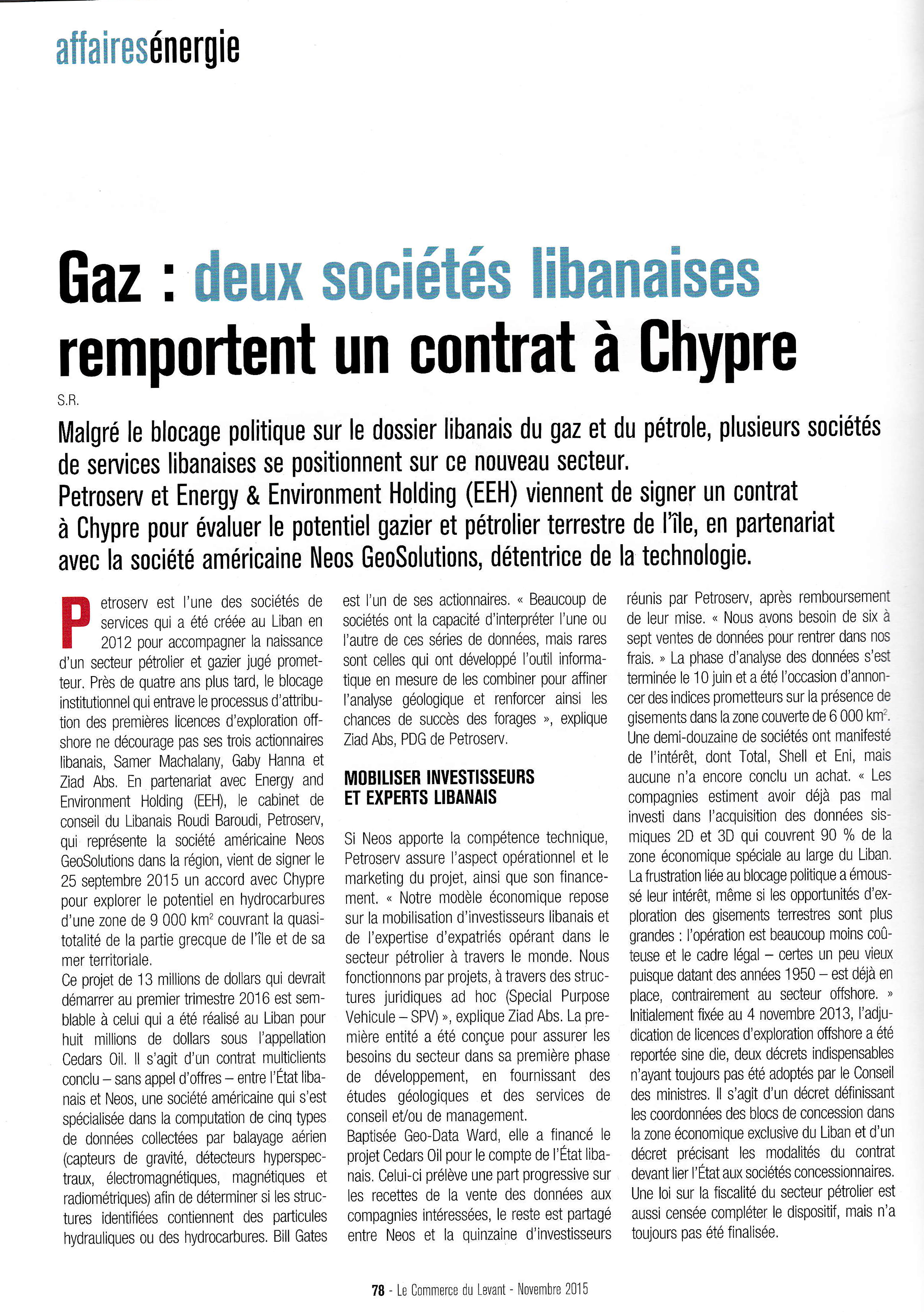
BEIRUT: The analysis of Lebanon’s onshore oil and gas survey data revealed promising results, the CEO of the U.S.-based company tasked with the survey said Monday during a conference held at ESA business school in Beirut.

Jim Hollis, CEO of NEOS, told participants at the “Oil and Gas: Governance and Integration” forum that the company would be revealing the complete survey findings during a news conference set to be held Wednesday.

The survey, which covers 6,000 square kilometers, including the onshore northern half of the country and the transition zone along the Mediterranean coastline, integrates 2-D seismic data with airborne geophysical datasets to determine prospective oil and gas resources, Hollis said.

A number of energy experts have argued recently that keeping the immediate focus on onshore oil and gas exploration could help Lebanon become an energy producer earlier than most observers expect.

Lebanon’s government has yet to approve a draft bill on onshore petroleum resources before referring it Parliament for ratification.

The law governing onshore petroleum resources will complement the Offshore Petroleum Resources Law that was ratified in 2010.

While five years have passed since the ratification of the Offshore Petroleum Resources Law, the government has yet to issue two decrees that would pave the way for the first licensing round for offshore gas exploration in Lebanon’s exclusive economic zone.

The first licensing round was postponed last August for the fifth time due to political disagreements over the decrees pertaining to the designation of blocks that would be open for bidding and the terms of a draft on the Exploration and Production Agreement.

Gabi Daaboul, head of the legal department at the Lebanese Petroleum Administration, said during the conference that Lebanon should proceed with the gradual licensing of the 10 blocks that form Lebanon’s EEZ.

The gradual licensing of blocks would enable the Lebanese government to secure better terms in future licensing rounds, experts argued.

Roudi Baroudi, CEO of Energy and Environment Holding, an independent consulting firm based in Qatar, told The Daily Star on the sidelines of the conference that political bickering and instability was denting the confidence of international oil companies in Lebanon.

“Only by acting in unison could the political establishment regain the confidence of major industry partners,” Baroudi said.

Industry sources have warned that some international companies that prequalified for the first licensing round were re-evaluating the situation in light of the repeated delays as a result of the government’s failure to issue the two decrees.

Energy and Water Minister Arthur Nazarian warned during the conference that due to political bickering Lebanon could be squandering significant economic benefits, and urged the government to swiftly launch the first oil and gas licensing rounds.

Guillaume Leenhardt, global head of business development at Geneva-based Mercuria Energy Group, told participants that it would take almost five years to start production once the exploration phase kicks off.

Last month, Nazarian told The Daily Star that there was no indication yet on whether the Cabinet would hold a meeting in the near future to discuss and approve the two decrees concerning the number of blocks that would be auctioned and the revenue sharing agreement.

Lebanon’s potential offshore natural gas reserves are estimated at 25 trillion cubic feet, according to initial estimates carried out in the country’s exclusive economic zone.

Baroudi urged the government to arrange for the drilling of a few exploratory wells – both onshore and off – to prove the potential indicated by geological studies.

“Regional experience gives us reason to put the odds of success at between 65 percent and 85 percent, and the rewards in terms of increased interest by international oil companies and higher auction revenues could be huge,” he added.


Qatar’s Energy Acumen Spells Prosperity at Home and Stable Prices Around the World

logo

465740100404303754

by Roudi Baroudi
Qatar’s growing stature on the international stage did not come about by accident, but rather as the product of a concerted effort to acquire a larger and more constructive role in the region and around the world. This greater capacity to exert positive influences has been made possible by the country’s enormous gas reserves, but even these would not have sufficed without both effective management of those resources and many years of astute diplomacy.

There were never any guarantees that the sto­ry would have a happy ending. The first oil well, “Dukhan l,” was drilled in 1939, but Qatar did not gain full independence from Britain until 1971, and its flagship oil company, Qatar Petroleum (QP), was not formed until 1974. Like many resource-rich countries emerging from the era of colonialism, Qa­tar lacked many of the institutions and mechanisms required for effective governance, so for many years it did not derive maximum benefit from the produc­tion and export of crude.
Near the end of the 20th centm;y, however, the country and its territorial waters were found to be sitting atop huge deposits of natural gas in what would become known as the North Field. The co­lossal North Field covers an area of some 6,000 square kilometres, making it the single largest non-associated gas reservoir on the planet. Coupled with a new leadership that had the vision to make far-seeing investments, this gas has offered Qatar an opportunity to more than make up for lost time. As of 2014, the country’s gas reserves were estimated at more than 25 trillion cubic metres, surpassed only by Russia and Iran and equivalent to a whopping 14 percent of the world total.

It was foresight, though, not just raw reserves, that made Qatar what it is today Not content with the country being “just” another major producer of fossil fuels, the ruling family threw its weight behind finan­cial investments and technological choices that would make Qatar a global leader in several facets of the gas business. Accordingly, billions of dollars were spent to expand production, acquire the world’s most ad­vanced liquefied natural gas (LNG) trains, and build a fleet of ultra-modern LNG carriers to serve custom­ers around the globe. As a result, Qatar now leads all nations in exports of LNG. In addition, the country has been the foremost partner in the pioneering of re­search, development and commercialisation of gas-to­liquids (GTL) technologies, including a jet-fuel blend that reduces both emissions and operating costs.
Even more than natural resources, then, it is sound judgement that has transformed Qatar into the worlds wealthiest nation-state on a per capita basis, winning it a choice seat at the table when major power discuss the most pressing matter of the day It has used this influence to promote both economic and political sta­bility, striving to forge bilateral and multilateral rela­tionships with which to address shared concerns like war/occupation, poverty, and the environment.

This level of economic and diplomatic ambition re­quires across-the-board engagement and, when ap­propriate, strong leadership. Therefore, in addition to having Joined the Organisation of Petroleum Ex­porting Countries just a year after OPEC’s founding in 1960, Qatar also plays a central role in the Gas Exporting Countries Forum (GECF) set up in 2001, having hosted the GECF’s Executive Office and Sec­retariat since 2009.

GTL capital of the world
The GECF was established to promote the interests of the world’s leading gas producers by holding regular meetings to find common ground and develop solu­tions for shared challenges, but its selection of Doha to serve as headquarters re!lected a different priority, that of improving ties and coordination with consum­er nations. As a country that maintains warm relations with governments on both sides of several diplomatic divides, Qatar and its robust finances have been in­strumental in initiating and sustaining useful discus­sions of issues affecting the international gas market, providing a platform of stability that has allowed the development of a healthy and prosperous energy market that benefits all stakeholders.
Despite the volatility of the hydrocarbon markets and their relationship to international politics, Doha, in particular with its energy policy, has been a focal point of cooperation among producers and con­sumers with a view toward adopting new standards, regularizing markets and prices, and ensuring both stability and sustainability of supply so that demand is met in a mutually beneficial manner. The resulting safe and sustainable energy !lows, with fewer interruptions due to wars or other forms of instability, yields a variety of certainties that serve the interests of all countries. So it was that in less than a decade, a tiny country of just 2 million inhabitants became the most important force for maintaining global security and price stability for all forms of natural gas. Given the ever-increasing importance of natural gas in the global energy mix, this also means that Qatar con­tributes mightily to economic growth and !lourishing energy initiatives in virtually all comers of the world.
In addition, Qatar has employed skilful political lead­ership in urging its fellow gas producers to think long and hard about the difference between oil and gas prices. Oil remains the benchmark, as all other energy prices usually rise and fall under its influence. Qatar continues to study the causes that have led to gaps in the price relationship between oil and gas, and how collective action can both restore the link and achieve parity between the two. Given the many environmental and other advantages that gas offers over traditional en­ergy sources – including being non-toxic, near-perfect combustion, no soil contamination, and an enviable safety record – greater parity would seem to be in the interests of all concerned, including the planet itself.
The GTL venture is a prime example of innovation designed to ensure that more and more applications can use cheaper, cleaner-burning natural gas. Qatar is carving out yet another niche for itself, this time as “GTL capital of the world.” Only two other coun­tries – South Africa and Malaysia – possess similar facilities, and Qatar’s access to affordable feedstock will give it significant advantages for years to come. By 2016, national production of GTL will amount to 174,000 barrels a day, radically increasing sup­plies available to help airlines, local public transport and utilities to reduce their carbon footprints.
The natural gas industry is growing and globalizing as demand expands and new technologies like GTL enable and inspire creative new ways to customize compatible products and services. Simultaneously, Qatar’s backing of a positive global energy dialogue,

reliable production and massive investment in todays fuel of choice are bringing more stability and securi­ty of supply to regional and global markets because in the gas industry, volumes and prices are defined primarily by long-term contracts, consumers and supplies. In 2006, Qatar and two of its neighbors, Oman and the UAE, completed the first cross-bor­der regional gas pipeline, linking the North Field to customers in Abu Dhabi, Dubai and Oman. This tri-nation sub-sea gas pipeline project was an unprec­edented achievement and so set a fitting example of strategic inter-energy connecting grids.
The impacts go far beyond the energy business. For example, Qatar has worked very sucessfully to foster better environments for strategic partnerships, and to achieve greater energy security while improving cli­mate protection in the discovery, development and production of cleaner and more efficient fuels. This combination imparts enormous value to society by inspiring confidence in the strength and durability of the national economy and the policies pursued by the government, both at home and abroad. Better fuels mean higher standards of living, greater social stability, and a cleaner environment. The revenues and cost sav­ings can be a game-changer in reducing poverty, and the Qatari government has worked to ensure that thegas industry operates with due regard for social, moral and environmental impacts. On this last score, achiev­ing a truly open global market for gas is perhaps the single greatest step government and industry can take to achieve genuinely significant levels of de-carboniza­tion in the coming years.
Even as I write, the world is rapidly moving toward commercialization of energy technologies indepen­dent of carbon, such as photovoltaics and fuel cells. These will take time to mature, particularly in terms of applications requiring large mobile energy sup­plies, so gas will be the natural bridge that joins the carbon and post-carbon eras.
For now, the oil and gas industry continues to de­cide the future of our world economy, and energy and capital complement one other. Therefore, the emerging primacy of gas will only solidify Qatar’s position as a global energy titan, and continue to fuel its diversification as an emerging business and logistics hub in today’s highly competitive world. And if recent history is any guide, the same resourc­es will help fund investments that make the country a player in tomorrow’s world as well.


قدّم إلى سليمان دراسته الأخيرة حول “الطاقة في المنطقة” بــارودي: “إعلان بعبدا اقتصـادي” يجنّـب الإنهيــار

465740100404303754 logo

المركزية- تسلّم الرئيس العماد ميشال سليمان من الخبير الدولي في قطاع الطاقة رودي بارودي دراسته الأخيرة لهذا العام حول “وضع الطاقة في المنطقة” بعد الدراسة السابقة التي أعدّها في هذا الشأن عام 2008، وذلك خلال زيارة قام بها بارودي للرئيس سليمان في منزله في اليرزة قبل ظهر اليوم.

وتركز البحث في خلال اللقاء، على أهمية الإستكشاف والتنقيب عن الغاز والنفط في لبنان وخصوصاً البدء بالمسح البري بعد مدة زمنية فاقت الـ60 عاماً منذ آخر عملية استكشاف، وضرورة عدم تضييع الفرص في هذا المجال للإفادة من هذه الثروة إلى أقصى حدّ.

وكانت مناسبة شكر فيها بارودي للرئيس سليمان محافظته على الثروة النفطية اللبنانية طوال عهده في سدة الرئاسة، ومتابعته الحثيثة لتطورات هذا الملف عبر مواكبة الإتصالات الجارية مع الدول المعنية بالتنقيب في المياه الإقليمية، سعياً إلى حفظ حقوق لبنان في حصته النفطية.

وشدد بارودي في خلال اللقاء، على “أهمية تعزيز العلاقات بين لبنان وقبرص في ملف النفط والغاز، وتنمية أواصر التعاون خصوصاً في مجال الغاز السائل والتصدير إلى أسواق أوروبا الأقرب على الإطلاق لتسويق الغاز”، مشيداً بـ”النشاطات الجبارة التي تقوم بها هيئة إدارة قطاع البترول في لبنان”.

وأكد أنه “لا بدّ من إحياء ما طالبنا به منذ نحو سنتين، بضرورة صوغ “إعلان بعبدا اقتصادي” يجمع كل الأفرقاء ليشبكوا الأيدي وينكبوا على إبعاد شبح الإنهيار الإقتصادي عن لبنان وجبه كل التحديات والمشكلات التي تعوق نموّه وازدهاره، وبالتالي الإفادة من كل الفرص المتاحة على أكثر من صعيد ولا سيما التنقيب عن النفط والغاز في البرّ وفي مياهنا الإقليمية”.


Uncrossing wires – An emergency rescue plan for Lebanon’s electricity sector

logo

unnamed

Lebanon’s electricity sector faces severe difficulties on multiple levels, making it an unsustainable burden on the economy in general and the state budget in particular. Problems extend across all stages of the business process, from production to distribution, even billing and collection, despite the latter having been franchised out to private companies.

Promising proposals — including some very comprehensive ones — to address these issues have been drawn up by and for successive ministers of energy and water, including the latest policy plan approved by the Council of Ministers in June 2010.

These plans can work, but only when the required political decisions are taken to revive this vital sector by insulating it against personal and private interests, be they direct or indirect. Only in this way can we honor both the spirit and the letter of legislation already passed by Parliament by getting on with the implementation stage.

Several matters require urgent attention, including financial and administrative difficulties that have held up construction of a planned 435-MW generating station at Deir Ammar and a similar facility at Zahrani, the combined output of which would provide the country with at least a bare minimum of its power needs. Specifically, the Council for Reconstruction and Development should be tasked with securing the necessary funds from supporting institutions so that implementation can start immediately.

The politics of electricity

The national interest demands that this be done as quickly and as cleanly as possible, because the last thing Lebanon needs is a dispute with a contractor that leads to court proceedings and/or arbitration that could take years to unfold. It is clear that franchising measures adopted by the Ministry of Energy and Water are tainted with a lot of gaps.

Easing Lebanon’s chronic power shortages also calls for urgent action to expedite the delivery and installation of new generating units at the Jiyyeh and Zouk plants. Timing is everything in such cases, because every day of delay increases the financial drain and other burdens on all consumers, from households and schools to companies and government offices. This directly undermines the productivity and competitiveness of the national economy, restricting GDP growth and soaking up resources.

Even more importantly, preventing future crises and enabling long overdue reforms demands that oversight be exercised by a duly constituted Electricity Regulatory Authority. Such a body has been created by legislation but successive governments have failed to appoint its five member leadership commission, as called for under Law No. 462 of 2002, preventing the authority from exercising its powers. There is an urgent need to appoint the Electricity Regulatory Authority, as more than 14 years have passed since the issuance of the law calling for its formation, without any legal or legitimate reason being provided for this delay.

The failure to fully implement Law 462 has prompted the legislature to pass Law 288, which alters Article 7 of Law 462 by adding the following paragraph: “Temporarily, for a period of two years, and until the appointment of members of the Authority and giving them their tasks, the production permissions and licenses will be granted by a decision of the Council of Ministers upon a proposal of the Ministers of Energy and Water, and Finance.”

The establishment and empowerment of structures similar to the Electricity Regulatory Authority has been crucial to developing and implementing advanced energy and consumer-protection strategies in jurisdictions around the world — including Europe and our own Euro-Med region — so it remains a mystery why some parties insist on denying this proven setup to Lebanon and the Lebanese.

And as though all that were not sufficient to bring development of the sector to a standstill, a new board of directors has not been assigned for Électricité du Liban (EDL), the country’s state owned power company, since 2005. This has sharply curtailed or even eliminated follow up on the completion of major projects designed to help meet minimum requirements, and committed Lebanon to huge amounts of money.

Then there is the matter of the fuel required for the generating stations at Zahrani and Deir Ammar. Based on the advice of Électricité de France (EDF) and under the terms of the national energy strategy developed in 1992–1993, both facilities were designed and built to operate primarily on natural gas rather than diesel oil. This would impart several benefits, including lower production costs, less environmental impact and longer service lives for generating units.

Once again, however, political bickering and clashes of personality have prevented full implementation of the plan, in this case by failing to secure the necessary gas supplies. As a result, both plants have been run almost exclusively on oil derivatives, obviating some of their design advantages and burdening the treasury with massive bills for fuel that is dearer, dirtier and less efficient.   

An agreement was signed in 2009 to finally link Deir Ammar with the Arab Gas Pipeline, built to carry Egyptian gas to customers in Israel, Jordan, Lebanon and Syria, but the deal was never fully implemented. And in light of mounting instability in the region since 2011, it is highly unlikely that Lebanon will see any benefit from this for the foreseeable future: Egypt has been unable to meet its existing supply obligations for the past three years, and badly needed repairs and maintenance cannot be carried out on Syrian sections of the pipeline through which any Lebanese imports would have to traverse.

Regasification, regulation

Since operation of the electricity plants in Zaharani and Bedawi that relied on natural gas has become impossible without the presence of gas pipelines, and the natural gas liquefaction near the production facilities has become indispensable and irreplaceable, it is imperative for the Lebanese state to start buying, renting or establishing a floating station(s) for liquified natural gas storage, and for its regasification — necessary for the two power plants in Zahrani and Deir Ammar. A floating storage regasification unit (FSRU) would need to be established in each, even if that required the expansion of the port, or the establishment of breakwaters to protect the station from marine factors.

The procurement of the two FSRU stations would allow enormous savings on the price of fuel, significantly reducing the need for public financial support for EDL. It also would substantially reduce the utility’s debt ratio; a crucial requirement because the potential impact of government and EDL measures to improve bill collection remains limited. This would lead to the reduction of financial transfers to the EDL mitigating the debt to GDP ratio, particularly since the capability of the government and EDL to collect bills and prevent electricity theft or attacks to the grid remains limited, reducing the ability to rein in the deficit.

Initially at least, both floating stations should be rented or leased, provided that the awarded contractor or promoter has both the requisite international experience and a demonstrated ability to supply the natural gas in addition to the stations simultaneously. This would translate into substantial cost savings for the control and supervision of the facilities. Any such agreement also should follow the “key in hand” method, which would leave the financing of construction to the contractor, reducing the risk to the state and allowing it to start paying only when it has taken delivery of fully operational facilities. And since we know in advance the amount of fuel required by the power plants, the contract should stipulate the dates, quantities and costs of gas deliveries. This formula has been tried and tested in several jurisdictions, including Dubai, Jordan and Kuwait, and there is no reason why it would not work in Lebanon.

Until steps are taken to regularize the electricity sector by implementing existing legislation, and until the almost year long vacancy in Lebanon’s presidency is filled, it is advisable that oversight be exercised jointly by the Parliament and the Council of Ministers.

No individual, though, no matter how influential, can make this happen without securing the trust and cooperation of others. Some features of the Lebanese political landscape are difficult to agree on, but this one is not. National pride, political responsibility and basic common sense dictate that we act quickly to end the mismanagement of this problem. Only then can we start eliminating all forms of waste, alleviating the losses of the state and meeting the needs of power hungry homes and businesses.


دعا “اغتنام دعوة بري إلى التلاقي للحوار الإقتصادي بارودي: للإسـراع فـي تثبيت حقوق لبنان النفطية

logo

465740100404303754

المركزية- فيما لبنان لم يطلق بعد صفارة البدء بالتنقيب عن النفط والغاز في المنطقة الإقتصادية الخالصة، صدر في الأيام الأخيرة كلام عن رئيس مجلس النواب نبيه بري مفاده أن إسرائيل تسرق الغاز اللبناني، الأمر الذي من المفترض أن يحث المسؤولين المعنيين على التعجيل في إتمام هذا الملف من جوانبه كافة، لأن الوقت ليس لصالح لبنان.

الخبير الدولي في شؤون النفط رودي بارودي شدد على وجوب تثبيت الحدود مع دول المنطقة كافة، لكنه لفت إلى أن “المشكلة تكمن في عدم توقيع ثلاث دول في المنطقة هي تركيا وسوريا وإسرائيل، معاهدة الأمم المتحدة لقانون البحر حتى اليوم، والتي تحدّد لكل دولة المنطقة الإقتصادية الخالصة، وما لدى لبنان اليوم هو تقريباً 20 ألف كلم2 في البحر”.

وأضاف في حديث لـ”المركزية”: من أصل 854 كلم2 من المنطقة المتنازع عليها مع إسرائيل، تمكن لبنان عبر الوسيط الاميركي، من تثبيت سيادته على ما يقارب 530 كلم2، لكن تم ذلك على وقع خلافات حول ترسيم مساحات أخرى بين لبنان وإسرائيل، ولبنان وسوريا، وبين تركيا وقبرص.

وقال بارودي: على الحكومة أولاً أخذ ما أعلنه الرئيس بري في اليومين الأخيرين على محمل الجدّ وعدم التهاون في هذا الموضوع، وإجراء الإتصالات اللازمة للتثبت من المعلومات حول سرقة إسرائيل للغاز اللبناني، وبالتالي رفع شكوى إلى الأمم المتحدة في القضية، واتخاذ الإجراءات الكفيلة بمنع إسرائيل من ذلك. وثانياً استكمال الإجراءات وإقرار القوانين اللازمة ولا سيما قانون الإستكشاف البري، والإسراع في تثبيت حقوق لبنان النفطية، خصوصاً أن لا مبرر للتأخير في البدء باستكشاف اليابسة ولا مشكلة في ذلك، علماً أنه الأقل كلفة على الإطلاق مقارنة بالإستكشاف البحري.

وإذ حيا جهود الرئيس بري في هذا المجال، شاكراً متابعته الحثيثة لهذا الملف لتجنيب لبنان إضاعة هذه الفرصة الذهبية، دعا بارودي جميع السياسيين إلى الإفادة من فسحة الحوار والتلاقي التي دعا إليها بري مطلع العام المقبل لتذليل الخلافات السياسية، واغتنامها للتحاور والتوافق على إزالة العقبات الإقتصادية وحلحلة مسائل هامة عالقة وأولها ملف التنقيب عن النفط والغاز، والإتفاق على البدء باستكشافهما براً وبحراً.