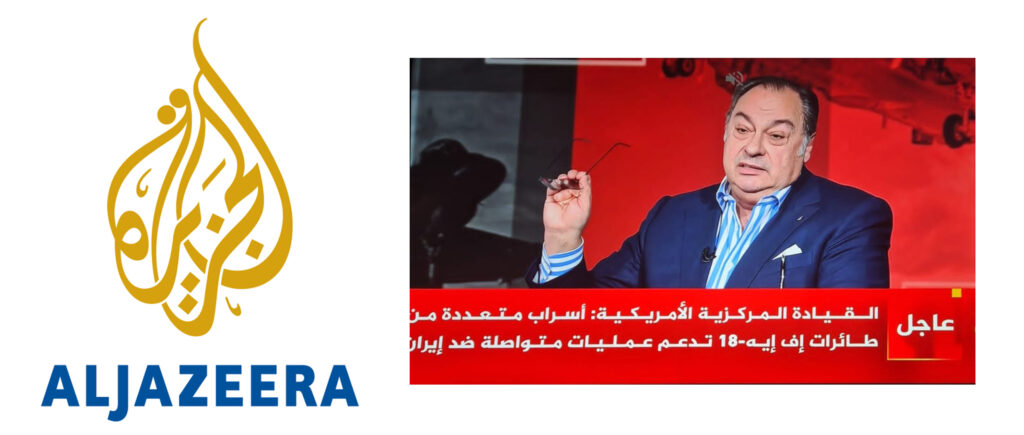
March 2, 2026, DOHA, Qatar: In a televised interview with Al Jazeera’s main Arabic channel, international energy expert Roudi Baroudi said that no country had the right to close the Strait of Hormuz.
The United Nations Convention on the Law of the Sea (UNCLOS), Baroudi told Al Jazeera, is clear on this matter, specifically Article 38, which explicitly guarantees the “right of transit passage, which shall not be impeded” for all foreign vessels transiting through the strait, and Article 44, which holds that states bordering straits “shall not hamper transit passage”.
Baroudi also warned that if traffic through Hormuz were halted, oil prices would quickly soar past $100 – and even $150 if the interruption persisted for any length of time.
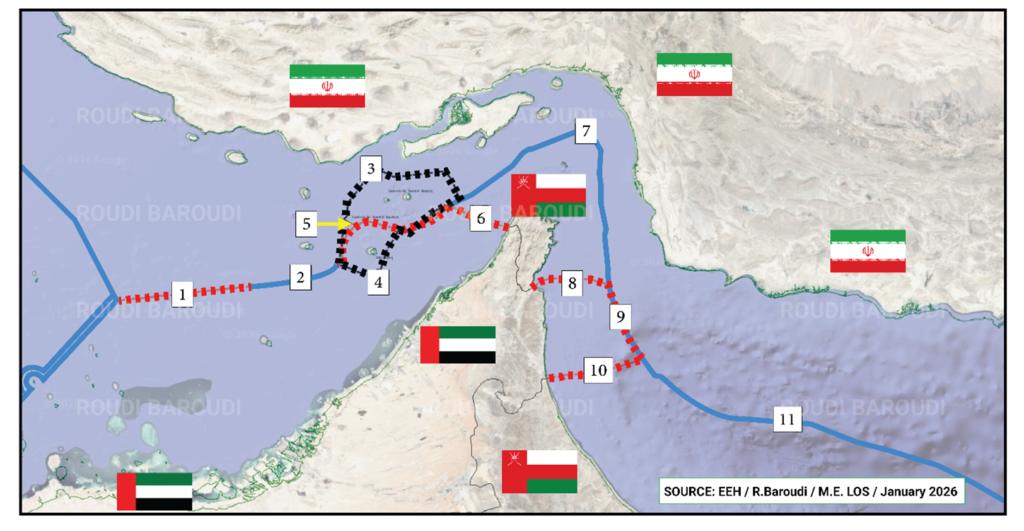
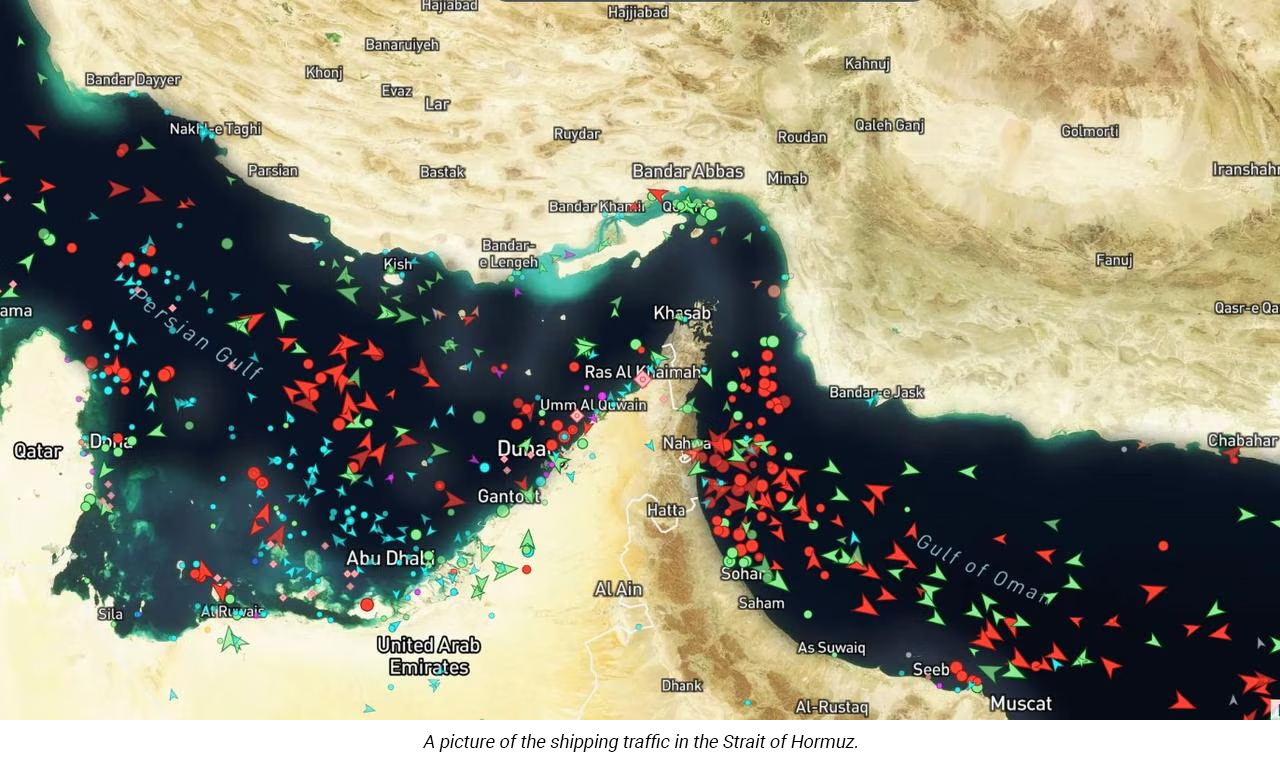
While the strait is commonly described as being 30-45 kilometers wide, he explained, most of it is too shallow for large vessels, and the transit lane – designated for the passage of all types of shipping, from oil tankers and LNG tankers to container ships and bulk food and other commercial cargos – is only 3 kilometers wide. Even here the depth is just 200-300 meters, and many of the oil tankers that use the strait are more than 325 meters long, and Qatar’s Q-Max LNG carriers are 345 meters.
Baroudi also noted that while Iran and Oman have had a maritime border agreement in place since 1974, only Oman has fully ratified UNCLOS. Iran – like the UAE, whose coast also touches the strait – has signed but not fully implemented all of the provisions. Nonetheless, he said, UNCLOS’ principles have become part of customary international law, making them enforceable on all coastal states, so all civilian vessels enjoy the right of passage without obstruction, inspection, or arbitrary restrictions.
Regarding the impact of current tensions, Baroudi noted that LNG prices were already rising and that $100 or even $150 oil was a distinct possibility if the conflict continued beyond a week or two. Any prolongation of exorbitant energy costs, he added, would have a direct and deleterious impact on the global economy, increasing inflationary pressures and the cost of living worldwide.